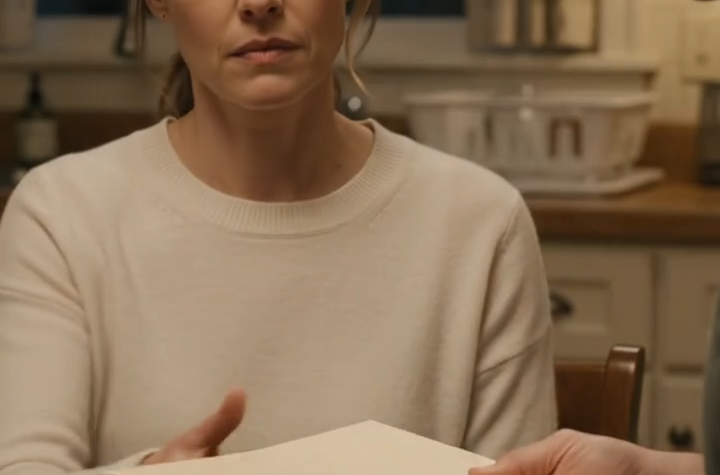
I preserved what I had, kept copies of the relevant records, and began the process of ending the marriage with proper counsel rather than turning my kitchen into a courtroom.
Brad initially fought the narrative harder than he fought the separation.
He said I was blaming him for Evan’s death.
I wasn’t.
The doctors had fought for Evan.
Evan had lived with a severe heart condition from birth.
I would not rewrite medical reality just to make Brad into a villain larger than the one his own choices had already made him.
I never claimed answering the phone would have saved our son.
That wasn’t the point.
The point was that Evan had needed his father.
I had needed my husband.
Brad had seen the calls and chosen absence.
Then he had chosen deception.
When he understood I would not exaggerate the facts, his defenses became weaker rather than stronger.
He couldn’t dismiss me as hysterical if I refused to say anything the evidence did not support.
So I repeated only what I could prove.
Seventeen calls.
Emergency texts.
A hotel stay.
Phone activity during the emergency.
And eventually, Brad’s own admission.
He had seen me calling.
He had chosen not to answer.
There was no dramatic courtroom confession.
No judge needed to declare what that meant to me.
The legal consequences were quieter: separation, disclosures, documents, signatures, the dismantling of a life we had once assumed would remain intact.
Brad apologized more than once.
Some apologies sounded sincere.
That didn’t rebuild what had disappeared in the space between my first call and his seventeenth unanswered one.
I could understand that he had been afraid.
I could even understand that years of living beside Evan’s condition had exhausted him.
Understanding was not the same as excusing.
Months later, I found myself looking at the original call log again.
For a long time, those seventeen calls had felt like evidence of helplessness.
Each one reminded me that I had been begging someone to come while my child slipped away from me.
Then I began to see them differently.
They were also seventeen records of what I had done.
I had noticed Evan couldn’t breathe.
I had called for help.
I had stayed beside him in the ambulance.
I had held his fingers in the emergency room.
When he whispered “Dad,” I had tried again.
When the doctors told me they were doing everything they could, I stayed.
When the alarms sounded, I stayed.
When his hand became still, I was there.
Brad’s absence belonged to Brad.
It was not something I had failed to fix.
I eventually stopped carrying the hotel receipt everywhere.
For weeks, it had lived inside a folder as though it were radioactive.
It had been the first physical object that told me the morning after Evan died was not what Brad claimed it was.
But the receipt was never the real ending.
The truth was.
Brad had believed grief would make me too shattered to question him.
For a while, he was almost right.
Losing Evan broke parts of me I still don’t have language for.
What Brad misunderstood was that grief did not erase my ability to recognize a lie.