He simply could not make the decision for me anymore.
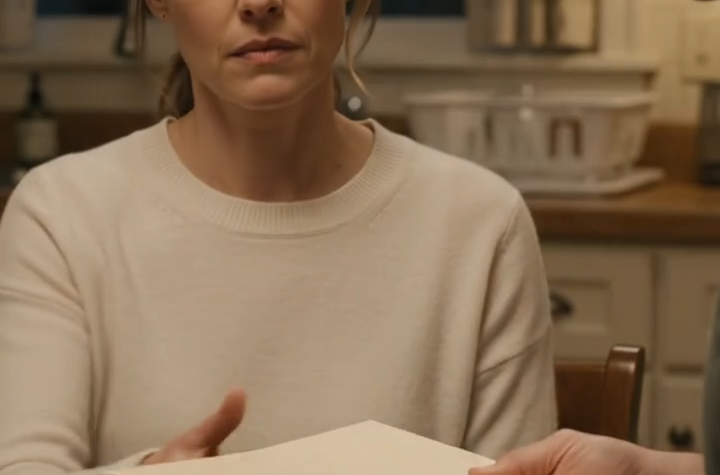
“Sit down, Wyatt,” I said.
He stayed standing for another second, perhaps waiting for my voice to soften.
It did not.
Finally, he dropped into the chair across from me.
The breakfast between us was untouched.
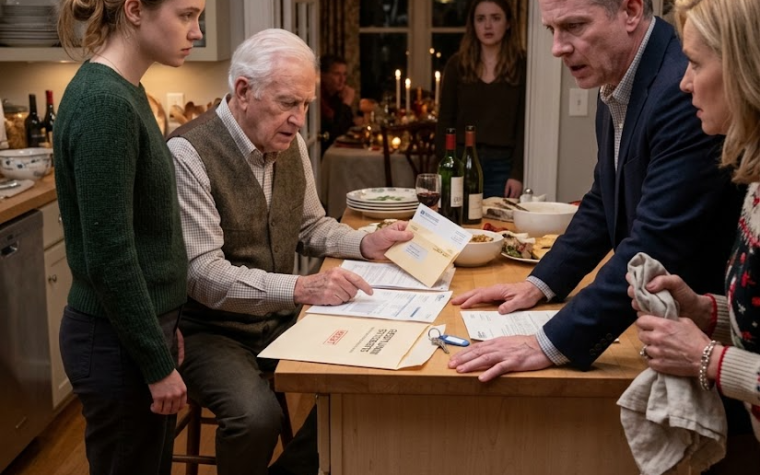
Harrison turned the first document around.
It was not magic.
It was not some secret fortune or dramatic inheritance.
Harrison had brought exactly what I needed because, during his trip to Savannah, I had told him what had been happening in the house and what I wanted done.
There were copies of the papers connected to my home and household accounts, records showing what I had been paying, and a written notice making my decision unmistakable: Wyatt could no longer treat my house as though it belonged to him simply because I was his mother.
The important part was not the paper itself.
The important part was that I was finally willing to enforce what it said.
Wyatt scanned the first page.
Then he laughed.
“You’re kicking me out?”
“Yes.”
He looked at Harrison.
“This is your idea, isn’t it?”
“No,” Harrison said.
“Your mother called me after you hit her.
She had already made the decision.”
Wyatt turned back toward me.
His face twisted with disbelief.
“Where am I supposed to go?”
The old reflex rose inside me immediately.
Where would he sleep?
What would he eat?
Would he have enough money?
Would he be angry?
Would he hate me?
For years, questions like those had ruled every decision I made.
Then I remembered standing alone by the counter, feeling the heat in my cheek while Wyatt walked upstairs without even looking back.
“You are twenty-three years old,” I said.
“You will have to decide that.”
His chair scraped backward.
“This is unbelievable.”
“No,” I said.
“What happened last night was unbelievable.”
“You’re acting like I beat you half to death.”
Harrison’s jaw tightened, but he remained seated.
I answered quietly.
“You hit me.”
“It was one time.”
“One time was enough.”
Wyatt stared at me.
Then came the version of him I knew best: the one who could move from threatening to wounded as soon as anger stopped working.
“So that’s it?” he asked.
“I’m your son and you’re throwing me into the street because of one mistake?”
There it was.
My son.
For years, those two words had been the key he used to unlock every door I tried to close.
My son needed rent money.
My son had lost another job.
My son had been drinking because he was depressed.
My son had broken the glass because I had pushed him too far.