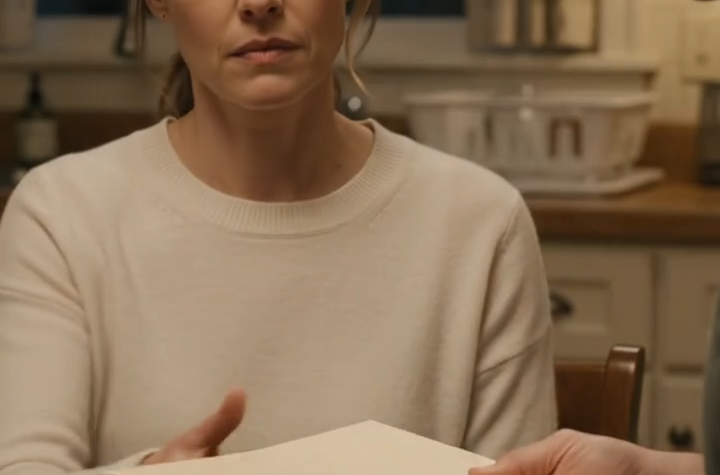
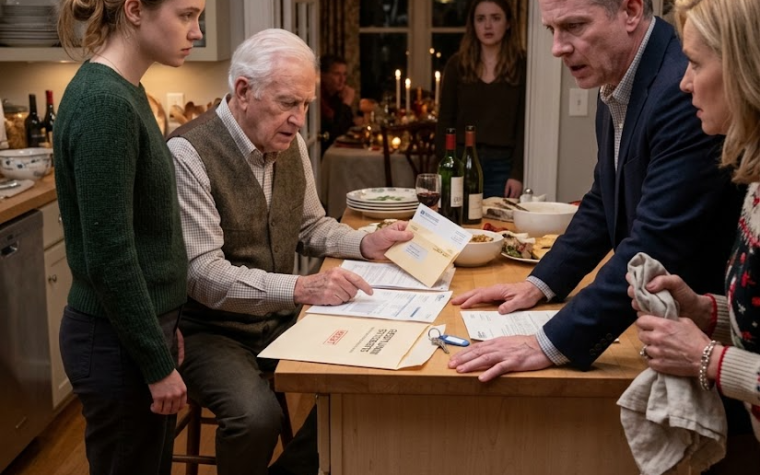
“And he is yours.”
Daniel looked away first.
The legal process moved slowly after that, but the truth did not retreat.
Daniel changed his story twice.
First, he claimed Noah had slipped while being lifted from the crib.
Then he said the bruises came from a tight diaper.
The medical photographs contradicted him.
So did Megan’s statement.
So did his recorded confession.
He eventually admitted that he had lost his temper and gripped Noah while shouting at him to stop crying.
He insisted he had never intended to cause pain.
The court did not treat lack of planning as innocence.
Daniel accepted responsibility as part of a plea agreement.
He was ordered into an intervention program, barred from unsupervised contact, and placed under court monitoring.
Any future relationship with Noah would depend on years of demonstrated change, not promises made after consequences arrived.
Megan faced a different reckoning.
She had not caused the bruises, but she had seen them and delayed seeking help.
The court required counseling, parenting education, and supervised visits.
She accepted every condition without argument.
During her first visit at my house, she stood in the living room and looked at the old rocking chair.
“I kept thinking I could fix it without destroying the family,” she said.
I adjusted Noah’s blanket.
“The family was already being destroyed.”
“I know that now.”
“Knowing afterward is not the same as acting when it matters.”
She nodded.
“I know that too.”
There was no easy forgiveness between us.
I did not hate her, but I refused to turn fear into an excuse.
She had been trapped in Daniel’s manipulation, and she had also failed Noah when he needed immediate protection.
Both things could be true.
Over the following months, she did the work required of her.
She attended every supervised visit, never blamed Noah for crying, and never asked me to hide anything from the social worker.
Slowly, she learned to speak about Daniel’s behavior without lowering her voice as though he might overhear from another room.
Noah healed faster than the adults around him.
The bruises faded from purple to yellow and then disappeared.
His cries became easier to understand.
Hunger had one rhythm.
Exhaustion had another.
Sometimes he simply wanted to be held.
On those nights, I sat in the chair by the window and rocked him until his breathing settled.
I often thought about the notepad beside my phone.
The time 10:47 remained written on the top sheet for weeks.
That was the moment I had stopped dismissing what I heard.
At 10:52, I had taken the photograph.
At 11:11, I had carried the truth into a building where trained people could no longer be persuaded to call it something softer.
Those minutes mattered.
Months later, after the court granted me continued temporary guardianship, I returned home carrying a new folder filled with medical reports, placement documents, and hearing notices.
I placed it in a locked drawer.
Not because I wanted Noah to grow up surrounded by evidence of the worst night of his life, but because one day he might ask why everything changed when he was two months old.
When that day comes, I will tell him the truth carefully.
I will tell him his father hurt him.
I will tell him his mother was afraid and waited too long to ask for help.
I will also tell him that he cried until someone listened.
That his pain was not ignored.
That the marks on his body were not explained away.