I heard the words, but I could not react.
My lawyer touched my shoulder.
“You’re free.”
Behind me, Noah began to sob.
I turned, and this time no rail, guard, or order stopped me.
He ran into my arms.
I held him so tightly that the blue backpack became trapped between us.
My daughter remained a few steps away.
She was crying too, but she looked uncertain whether she had the right to approach.
Daniel had spent years teaching her that I abandoned the family, stole their future, and forced him to testify.
She had repeated those beliefs until they became part of her identity.
Now she looked at me as if she were seeing both her mother and the damage done in my absence.
“I believed him,” she said.
“I know.”
“I wouldn’t answer your letters.”
“I know.”
Her face crumpled.
“How can you even look at me?”
I reached for her hand.
“You were a child trapped inside an adult lie.”
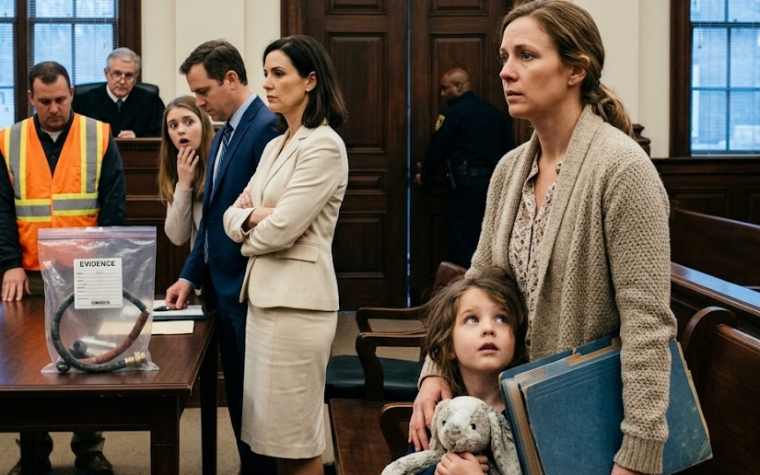
She stepped forward, and I held both of my children in the center of the courtroom where Daniel had expected to watch me lose everything.
He was not there to see it.
Investigators had taken him through a side door after the financial evidence was confirmed.
He was later charged with fraud, perjury, obstruction, and falsifying evidence.
His assets were frozen, and the company entered receivership while ownership records were reviewed.
The legal consequences took months to unfold.
My name was restored quickly on paper, but rebuilding a life was slower.
Some people who had ignored me sent apologies.
Others claimed they had always doubted Daniel.
I stopped trying to decide which apologies were sincere.
I had spent six years begging people to believe me.
I would not spend another six judging whether they deserved forgiveness.
The company was eventually returned to my control, along with restitution recovered from Daniel’s accounts.
I did not celebrate when the documents were signed.
I sat at a quiet conference table and remembered the kitchen where Daniel and I had once imagined building something together.
The business had survived.
The marriage had been a performance I understood only after it ended.
Noah kept the blue backpack.
The tablet remained evidence, but the court returned the backpack after removing it.
I offered to buy him a new one.
He shook his head.
“This one brought you home,” he said.
My daughter began visiting without being asked.
At first, our conversations were careful and short.
She told me small things about school, friends, and the years I had missed.
Eventually, she brought the letters I had sent from prison.
Daniel had told her he destroyed them.
He had actually hidden them in a locked cabinet.
She had found every envelope unopened.
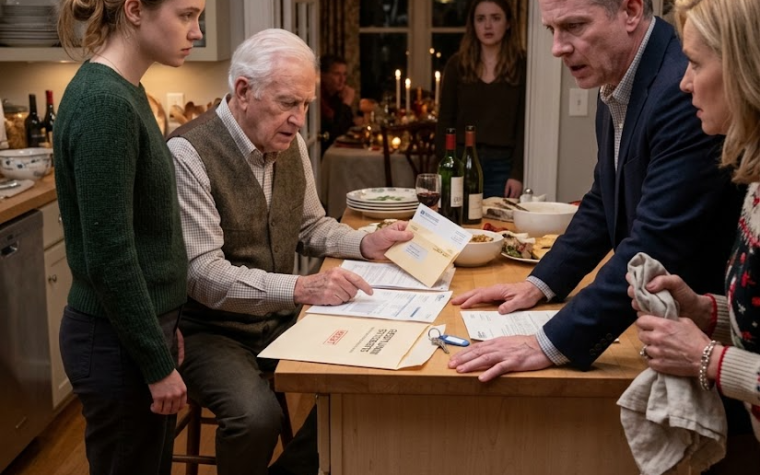
We read them together at the same kitchen table where the company had begun.
Some contained birthday wishes years too late.
Others described ordinary dreams: making breakfast for them, driving them to school, hearing them argue over the bathroom.
My daughter cried when she reached the final line of the first letter.
No matter what you are told, I did not leave you.
She placed her hand over mine.
“I know that now.”