Judge Elwood raised a finger.
“I am not finished.”
The attorney closed it.
The judge’s next words were measured.
“Poverty is not neglect.
Working nights is not neglect.
Wearing an inexpensive shirt is not neglect.
The court’s concern is whether a child is safe, cared for, supported, and given appropriate stability.”
He looked at Logan.
“And stability includes emotional stability.
A child should not be made to believe that one parent’s financial position determines whether that parent deserves to remain in his life.”
Logan’s face reddened.
“I never tried to turn him against her.”
“You may address the court through your attorney.”
Mr.
Brackley placed a calming hand near Logan’s arm.
Logan pulled away from it.
That small movement said more than anything he had done all morning.
He had expected the hearing to be about my shortcomings.
He had not expected anyone to examine his behavior with the same care.
Judge Elwood recessed briefly to review the submitted records.
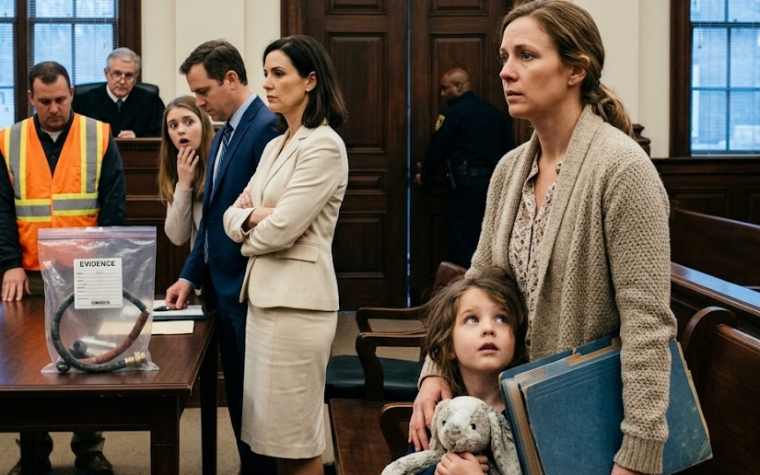
Crew returned to the bench beside me.
The second he sat down, I wrapped my arm around him.
I wanted to tell him he had been brave.
Instead I whispered, “You never have to protect me from grown-up problems.”
He leaned against my shoulder.
“I didn’t want them to think you didn’t buy me stuff.”
I closed my eyes.
“Oh, Crew.”
“The shirt is good,” he insisted.
A laugh escaped me before I could stop it.
It came out mixed with tears.
“Yes,” I whispered.
“The shirt is good.”
Across the aisle, Logan sat with Mr.
Brackley.
They spoke in low voices.
Logan gestured sharply once toward my folder and then toward the bench.
Mr.
Brackley shook his head.
Whatever confidence had filled their side of the courtroom earlier was gone.
When Judge Elwood returned, everyone stood.
He reviewed the history of the case without drama.
He said the court had considered the arguments regarding finances, work schedules, housing, school involvement, medical care, and the concerns raised that morning.
Then he addressed Logan’s request for a change in custody.
“The evidence presented today does not establish that the mother is failing to provide appropriate care.”
My hand found Crew’s.
“The requested modification of primary custody is denied.”
Crew squeezed my fingers.
I stared at the judge because I was afraid that if I looked anywhere else I would start crying.
Judge Elwood was not finished.
He reminded both of us that Crew was not to be used as a messenger, witness, or weapon between parents.
Adult financial disagreements and litigation were to remain away from him.
He directed that the existing custody arrangement remain in place and made clear that future disputes needed to focus on Crew’s actual welfare rather than appearances.
Then he looked directly at Logan.
“A parent having more money does not create a presumption that the other parent is less worthy.”