There lay the original trust agreement my mother had signed.
It named me as the sole beneficiary.
Until I reached the distribution age specified in the document, the money could be used only for my education, medical needs, housing, or other expenses directly benefiting me.
My father had been appointed trustee because my mother believed he would protect what she left behind.
Janet had no authority under the trust.
Tiffany was not a beneficiary.
A wedding in Nantucket was not an authorized expense.
My mother had made every part of that unmistakable.
Janet had spent years pretending the trust was simply a pile of family money my mother had selfishly reserved for me.
But a trust was not a family checking account, and resentment did not create a legal right to raid it.
The fraud officer told us the remaining balance had been frozen.
The transfer to the venue was being traced, and the venue had agreed not to release the funds while ownership was disputed.
Janet stared at the screen.
“You cannot freeze that payment.
The wedding is contracted.”
“That is precisely why we acted immediately,” my attorney replied.
Janet’s gaze shifted toward me.
“You planned this.”
I closed the binder halfway.
“No.
I prepared for it.”
Six months earlier, I had received a quarterly statement showing a small withdrawal labeled as an administrative consultation.
When I asked my father about it, he said Janet had been organizing his financial records and must have moved something by mistake.
Janet called me ungrateful for questioning them over such a small amount.
The withdrawal was reversed a week later.
Everyone expected me to let it go.
Instead, I requested copies of every document associated with the transaction.
The request showed that someone had used my personal information to create a beneficiary approval form.
The form had been rejected because the signature field was incomplete.
That was when I contacted an attorney.
We could not prove who had prepared the form.
Janet denied knowing anything about it, and my father insisted it was an error made by a financial assistant.
There was not enough evidence for a court to remove him as trustee, but there was enough to warn us that someone might try again.
So we built Operation NIGHTINGALE.
The name came from my mother.
When I was a child, she used to tell me that nightingales were difficult to see but impossible to silence once they began to sing.
She said courage did not always enter a room loudly.
Sometimes it waited in the dark until the right moment.
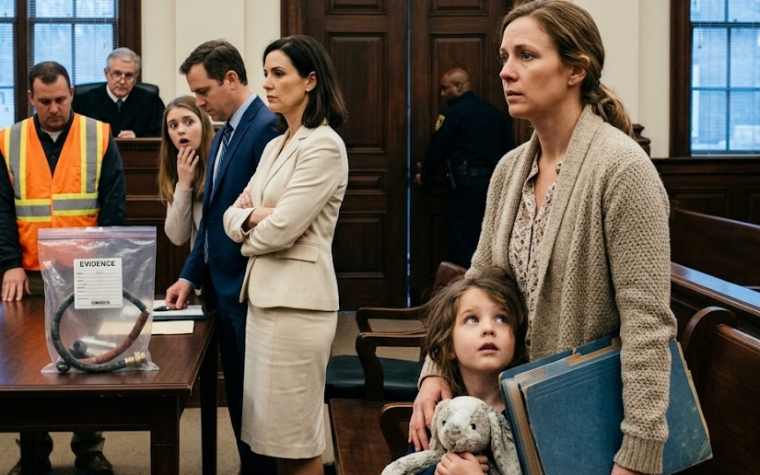
My binder held the trust agreement, statements, signature samples, correspondence, bank contact information, copies of my identification, and my deployment orders.
My attorney prepared an emergency petition that could be filed as soon as we obtained evidence of a serious unauthorized transfer.
The one thing we lacked was proof connecting Janet directly to the decision.
She had always worked through my father’s authority.
She wrote messages from his accounts.
She placed documents in front of him between other household papers.
She described every questionable action as something he had approved.
If challenged, she stepped back and let him absorb the responsibility.
Then she called me.
She did not call because disclosure was required.
She called because she wanted to hurt me.
Her need to celebrate the theft had made her careless.
She admitted that she had arranged the transfer, identified the purpose, confirmed that the venue had received the money, and declared that she had decided how the trust should be used.
My father and Tiffany had heard every word.
The call did not prove every element by itself.
It connected all the pieces already waiting in the binder.
My attorney filed the emergency petition before sunrise in Charleston.
Because I was overseas, I signed my declaration electronically and appeared at the emergency hearing by secure video.