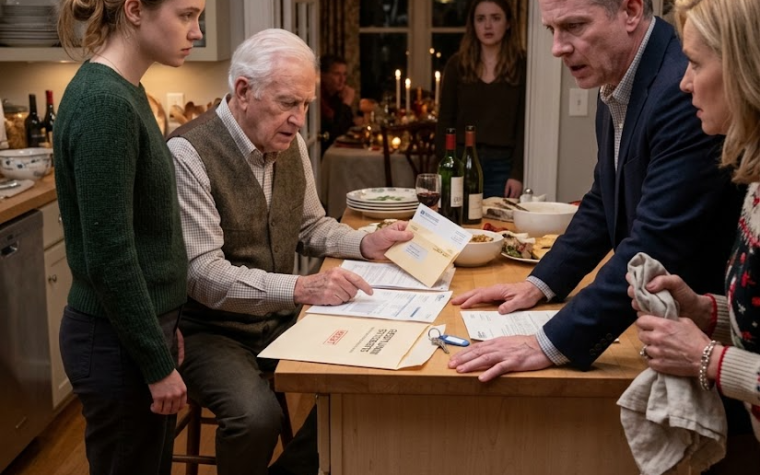
Then she claimed the documents were a misunderstanding.
Finally, she offered to let me remain in the house for six months if I agreed not to involve lawyers.
Helen told me to preserve every message.
Within a week, she filed a petition asking the court to confirm the trust, block any attempted transfer, and require a full accounting of the small education account my aunt had helped administer for Lucas after the accident.
That request produced another problem.
For eight years, my aunt had charged the account recurring administrative fees.
None had been approved by the court.
Individually, the withdrawals were small enough to avoid attention.
Together, they amounted to thousands of dollars.
She had been taking money while telling everyone she was helping from a distance.
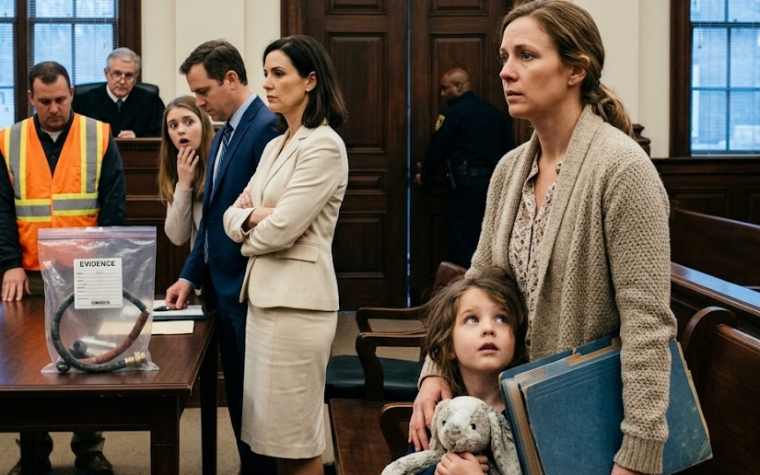
At the hearing, my aunt arrived with the same controlled expression she had worn at Lucas’s birthday dinner.
She told the judge she had acted only because she feared I was financially dependent on Lucas.
Helen presented my tax records, mortgage payments, repair receipts, school expenses, and medical bills.
I had never taken money from Lucas.
I had spent nearly everything I had keeping his life stable.
Then Helen played the recording.
My aunt’s expression collapsed when her own voice said, Once Emma is out, we can sell quickly.
Two relatives who had attended the birthday dinner gave statements confirming that she had pressured Lucas to sign before allowing anyone to review the documents.
One admitted that my aunt had told them I was adopted and therefore had no legal right to question the estate.
The judge confirmed the trust and my right to the home.
He declared that Lucas’s unsigned quitclaim deed had no effect and barred my aunt and her husband from making further claims against the property.
He also removed her from any role involving Lucas’s education account and ordered a formal audit.
Months later, she was required to repay the unauthorized fees, along with part of the legal costs caused by her actions.
There was no dramatic arrest.
No one was dragged from a courtroom.
The consequences were quieter and more permanent.
The relatives who had trusted her stopped returning her calls.
Her husband’s company dissolved.
The attorney she had misled sent us a written apology.
Every document she had tried to use became evidence of the plan she denied having.
Lucas chose not to pursue anything beyond repayment and protection of the trust.
“I don’t want revenge,” he told me.
“I just want them to stop treating you like you were temporary.”
That word broke something open inside me.
Temporary.
It was the fear Mom had tried to protect me from.
It was why she had hidden the adoption and why she had prepared the box in case someone ever used the truth as a weapon.
For weeks, I felt angry with her for not telling me while she was alive.
I imagined all the conversations we could have had.
I wondered who had given birth to me, what she had been like, and whether Mom had ever feared I would choose that unknown woman over her.
Then I watched the recording she had left in the safe-deposit box.
Mom sat in Helen’s office, younger than I remembered her, twisting her wedding ring as she spoke.
“Emma believes she has to earn her place by taking care of everyone,” she said.
“I need her to know that the house is not payment for raising Lucas.
It is her home because she is my daughter.
She was my daughter before Lucas was born, and she will be my daughter after I am gone.”
She looked directly into the camera.
“If you are hearing this, Emma, then I waited too long.
I am sorry.
But never let anyone tell you that blood made you less ours.”
I cried then.
Not because I felt abandoned.
Because for the first time, I understood how fiercely my mother had tried to make sure I never would.
Lucas left for college the following autumn.
His room remained exactly as he left it, except for the empty glasses I no longer had to collect from his desk.
He called every Sunday.