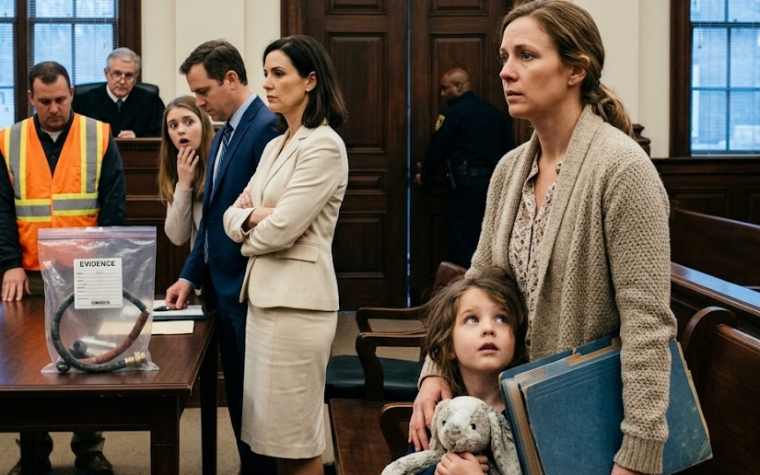
That was when the family finally stopped pretending this was about two missing envelopes.
People began calling me.
Some apologized.
Some wanted to explain why they had stayed silent.
One cousin said, “You know how Carol is.”
I told him, “That sentence is how people like Carol stay that way.”
I wasn’t interested in collecting apologies from adults who had watched my children be humiliated.
I wanted the rules applied honestly.
Three days after Easter, the trust attorney confirmed that Ethan and Lily qualified under the same descendant provision Carol had applied to the other children.
The trust accounting was corrected.
Equal $500 distributions were authorized for Ethan and Lily—not as charity, and not because I had threatened anyone, but because they had been entitled to the same treatment from the beginning.
I deposited the money into their savings accounts.
They never saw it as a prize.
I made sure of that.
The more important change happened with Carol.
The review found no missing fortune and no dramatic theft.
Reality was less theatrical and more damaging to her reputation: she had treated the trust like an extension of her personal authority, made discretionary decisions without documenting them properly, and assumed nobody in the family would challenge her because everyone depended on her knowledge of the paperwork.
The family attorney recommended independent bookkeeping and a second approval for future beneficiary distributions.
Carol lost the ability to make those decisions alone.
The lender did not cancel the high-rise.
It did something Carol hated more than a dramatic punishment.
It imposed conditions.
Her next construction draw remained delayed until a replacement guarantor was approved and the family-entity review was completed.
She had to renegotiate part of the schedule, absorb additional professional fees, and answer questions from people she could not intimidate with a look across a dining table.
I did not restore my guarantee.
She found another one.
The project continued.
But from that point forward, Carol could no longer say she controlled everything.
A week after Easter, my parents came to our house.
My father was still moving slowly after surgery.
My mother carried no gifts, which I appreciated.
They sat with Ethan and Lily at the kitchen table.
My father spoke first.
“When Aunt Carol said you weren’t family, I should have told her she was wrong immediately.”
Ethan looked at him.
“Why didn’t you?”
My father swallowed.
“Because I was afraid of making trouble.”
Ethan considered that.
Then he asked, “Wasn’t she already making trouble?”
My father almost smiled.
“Yes,” he said.
“She was.”
My mother took Lily’s hand.
“I’m sorry I made you stand there waiting for someone else to decide whether you belonged.”
Lily, who was still young enough to reduce the entire disaster to its simplest truth, asked, “Am I still your granddaughter?”
My mother’s face crumpled.
“Always.”
Marianne looked at me from across the room.
That was the first moment since Easter when I felt some of the anger leave my body.
Carol eventually sent an apology through her attorney.
It was carefully written and completely bloodless.
She regretted that her comments had been interpreted as questioning the children’s place in the family.
I read it once.
Then I sent one response.
You did not question their place.