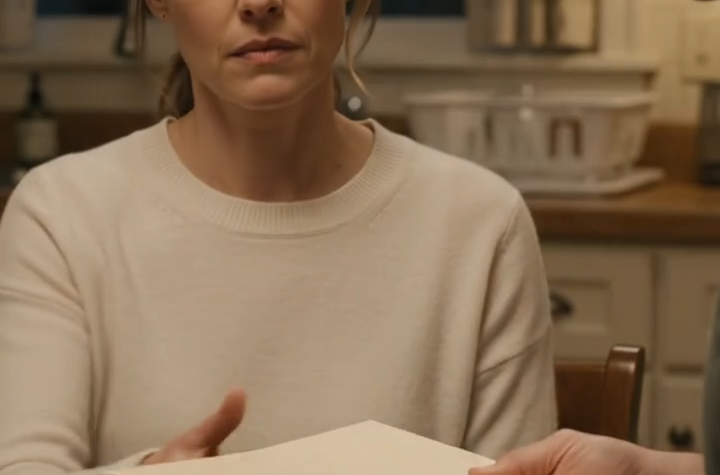
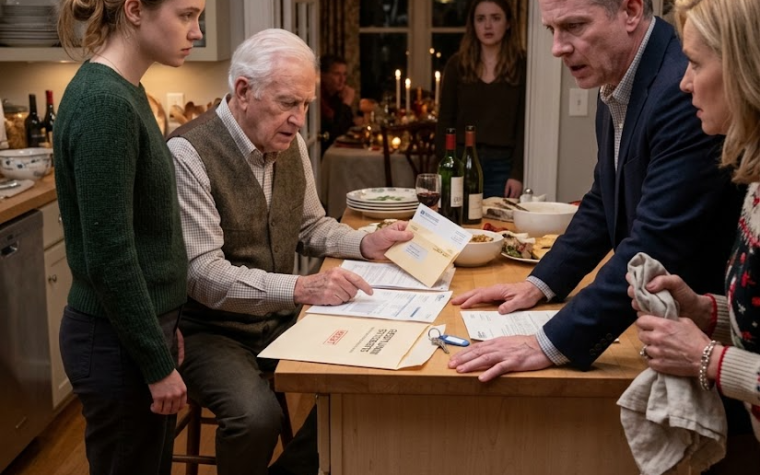
Some relatives blamed me until they heard the recording.
Others stopped calling after Francis told them he would not discuss reconciliation while his mother continued denying responsibility.
Francis came home four months later.
At the airport, he held me for a long time without speaking.
On the drive to our new place, he apologized again—not only for the break-in, but for every time he had asked me to endure what he should have confronted.
“I thought keeping the peace meant keeping everyone together,” he said.
“Sometimes peace means keeping danger outside.”
He nodded.
We visited Daniel and Mara the following weekend.
Their house had been repaired.
The walls were repainted, the study door replaced, and a new sofa sat in the living room.
Yet small signs remained.
A scratch on the floor near the staircase.
A pale blue shadow beneath the edge of the rug.
The repaired frame around Mara’s family photograph.
I brought them a new houseplant and an apology I still felt compelled to make.
Mara stopped me.
“You did not owe us information about your life just because someone else felt entitled to it,” she said.
“You are not responsible for what she chose to do with a lack of access.”
That sentence stayed with me.
On my next birthday, Francis was home.
He bought a chocolate cake from the same bakery and placed it on the kitchen counter with thirty-seven candles crowded across the top.
Before I blew them out, my phone vibrated.
For one second, my body remembered Lilly’s name flashing on the screen like a warning.
But it was Mara sending a photograph of the maple tree in full bloom.
The message beneath it said, “Your old house is peaceful again.”
I looked around my new kitchen.
Francis stood beside me.
The doors were locked.
The people inside were there because I wanted them there.
For years, I had mistaken restraint for silence and patience for permission.
Lilly believed my boundaries were an insult because she had benefited from my lack of them.
The day she destroyed that house, she intended to leave me surrounded by ruins.
Instead, she exposed the truth in her own voice.
I did not need revenge.
I did not need to humiliate her or convince every relative that I had been right.
The recording, the cameras, the deed, and her own choices had done what my explanations never could.
They made the invisible visible.
Francis lit the candles.
I closed my eyes, made a wish, and blew them out.
This time, when the room went dark, I was not alone.