I bought food.
I covered the house.
I opened my home.
That checking account was not spending money.”
“You never said we couldn’t use it.”
I stared at her.
“It was described as emergency access for me.”
“Well, Harrison had access.”
That sentence hung in the room.
Harrison looked up slowly.
Sloan seemed to realize too late how it sounded.
She tried to recover.
“I mean, if you didn’t want anyone using it, you shouldn’t have given access.”
I nodded once.
“You’re right about one thing.”
She blinked.
“I shouldn’t have left that access open.”
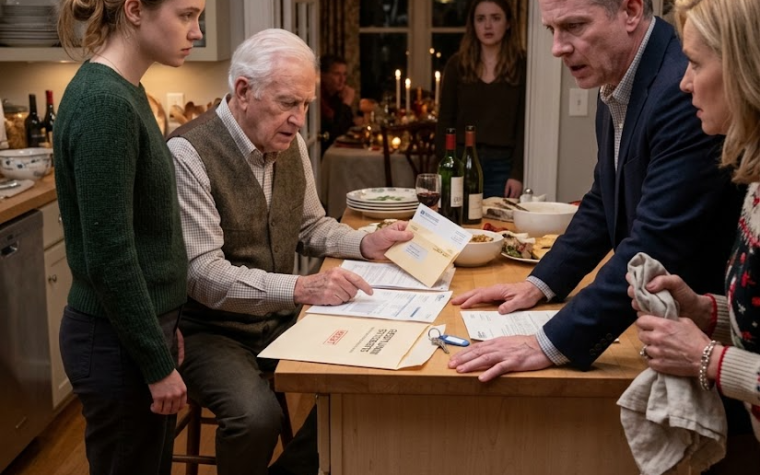
I put my hand on the folder.
“So now I haven’t.”
Her chair scraped backward.
“You are punishing us because of a birthday cake.”
“No.
I’m changing arrangements that should have changed months ago.”
“Your son lives here.”
“Yes.”
“This is his home too.”
I held her gaze.
“No, Sloan.
It is the house my husband left me.
Harrison is my son, and I allowed both of you to live here while you saved.
But legally, this house is mine.”
That was the moment the argument finally stopped circling around the Gucci bag.
Harrison looked at me differently.
Maybe he had simply never forced himself to think about it.
He had grown up in this house.
His childhood room was upstairs.
His father had lived here.
Familiarity had slowly become entitlement.
But memory was not ownership.
Sloan recovered first.
“So you’re threatening to throw us out?”
“I am telling you that the arrangement has changed.”
“What does that mean?”
“It means I will not finance your meals.
You will not use my accounts.
My bedroom and bathroom are private.
And you will stop treating me like hired help in my own house.”
She laughed, but there was no humor in it.
“All this over your dignity?”
“Yes.”
The word came easily.
“Yes, Sloan.
Exactly that.”
Harrison rubbed both hands over his face.
“Can everybody stop for a minute?”
I did.