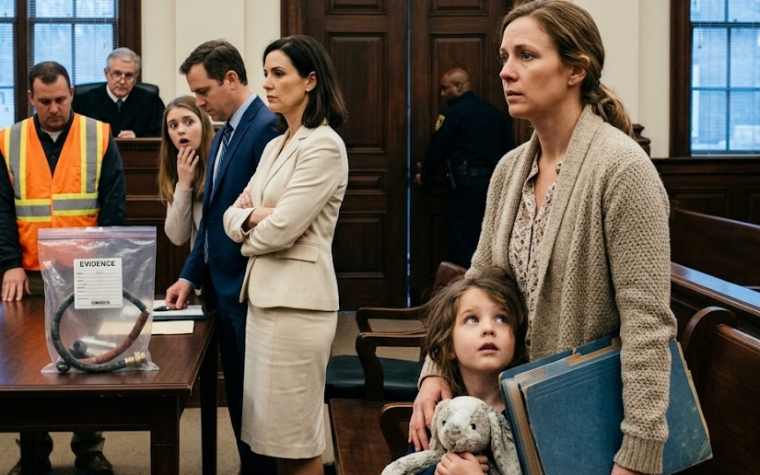
I opened the folder while Julian waited on the phone.
The deed lay inside exactly where I had left it after moving into the house.
My name was printed across the paperwork, though I didn’t need to read it again to know what it said.
I had worked for this home.
I had planned for it, saved for it, and built a life capable of carrying me forward after my husband died.
Every room represented years of decisions nobody else had made for me.
Yet less than twenty-four hours after refusing to attend my housewarming because Chloe wanted to sleep in, my daughter-in-law had already decided she and my son should have unrestricted access.
Julian cleared his throat.
“Mom?”
“I’m here.”
“Then why are you making this such a big deal?”
That question almost made me laugh.
For years, I had been the person determined not to make anything a big deal.
When Julian needed help covering an unexpected bill, I helped without humiliating him.
When Chloe arrived late to family events or skipped them entirely, I changed the subject before anyone could criticize her.
When she made cutting comments and then insisted she had only been joking, I told myself keeping the peace was more important than winning an argument.
I had confused patience with responsibility.
Somewhere along the way, they had started confusing my patience with permission.
I closed the folder.
“Julian, you were both too tired to celebrate my new home yesterday.
That’s fine.
But if you can’t be bothered to visit, you don’t need permanent access.”
Silence.
It lasted long enough that I could hear the faint sound of wind moving through the plants outside.
Then Julian began again.
He said Chloe hadn’t meant the message the way it sounded.
He said she was only excited.
He said having a key would make visits easier.
I listened.
The interesting thing was that every explanation changed except the request.
They still wanted the key.
“You can visit,” I said.
“You can call me, and we’ll arrange a time.”
“That’s not the same thing.”
“Exactly.”
Another pause.
He sounded genuinely confused by that answer.
For most of his adult life, I had made access to me effortless.
My time, my concern, my financial help, my home—everything had been available whenever he needed it.
I had done it because he was my son.
But love had quietly become entitlement, and entitlement had a strange way of making generosity invisible.
People stopped seeing what you gave them.
They only noticed when you stopped.
“Chloe’s going to take this personally,” he said.
“She’s allowed to have feelings about it.”
“Mom.”
His voice carried a warning now, as though Chloe being upset was an emergency I had been assigned to prevent.
That had been another unwritten family rule.
If Chloe was uncomfortable, everyone else adjusted.
I had adjusted enough.
“Julian, I love you,” I said.
“But this house is my home.
Nobody is entitled to come and go whenever they please.”
“Nobody? I’m your son.”
“And you are welcome here as my son.
You are not entitled to access as an owner.”