Another director followed.
Then another.
The motion collapsed before the vote could begin.
The counsel introduced a new resolution: suspend the director’s committee authority, preserve his office records, and refer the access violations for independent investigation.
This time, the vote was nearly unanimous.
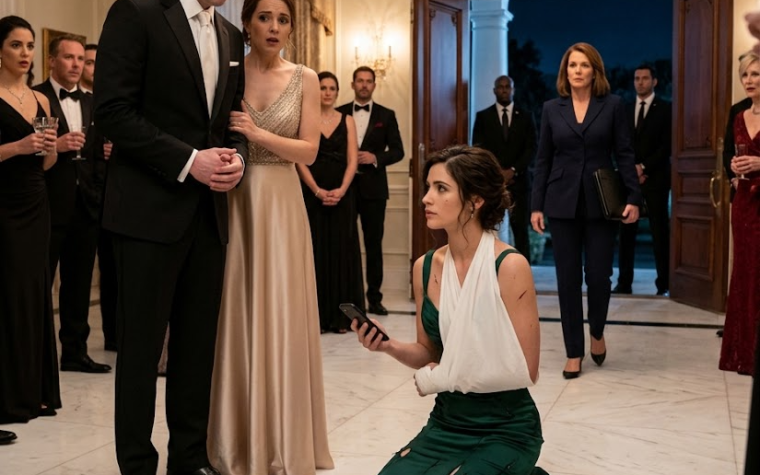
He did not look at me when security escorted him from the room.
He looked at Ethan.
Not because Ethan had more power.
Because Ethan was the person he had considered powerless.
That was the mistake he could not forgive.
The investigation lasted several weeks.
It confirmed that the director had been positioning himself to control the merger committee.
He believed my accident had created a rare opening.
If he could establish uncertainty about my health, he could suspend my authority without challenging my business results.
He did not need to prove I was incapable forever.
He needed only enough doubt to remove me during the merger vote.
The altered cleaning route had been designed as insurance.
If Ethan saw me in distress and spoke, the board would gain a witness.
If I fired or threatened him, they would gain evidence that I was suppressing an employee.
If he remained silent, the stolen rehabilitation file would still support their memorandum.
They had planned for every response except the one I chose.
I hired him.
That decision was not noble when I made it.
I did not summon Ethan because I had suddenly become generous.
I did it because the dates proved he had not betrayed me, and because his restraint under pressure told me more than his personnel file ever could.
I also did it because I recognized the machinery being used against him.
Debt.
Injury.
Dependence.
Fear.
The same people who called my brace a weakness considered his daughter’s asthma a lever.
They believed vulnerability made people controllable.
Sometimes it does.
Sometimes it teaches them exactly what control looks like.
The director resigned before the investigation concluded.
The company recovered the costs associated with the unauthorized access, and the board adopted new restrictions on medical information, emergency succession reviews, and executive-floor surveillance.
No single director could again initiate a fitness proceeding without documented evidence and independent review.
My own consequences were quieter.
The company issued a statement acknowledging that my recovery from the accident was ongoing.
I approved it without allowing anyone to describe me as fully healed or heroically unbroken.
Both descriptions were lies.
I was injured.
I was working.
Those facts could exist together.
The first time I entered the tower after the statement became public, cameras waited outside.
Reporters shouted questions about my brace and whether I intended to resign.
I walked carefully through the doors.
Not normally.
Carefully.
For the first time, I did not treat the difference as failure.
Ethan completed his ninety-day contract.
He identified several weaknesses in access procedures that senior consultants had overlooked because they understood the building from reports rather than from hallways, service elevators, and locked doors.
When the contract ended, I offered him a permanent position in operational security.
He read the offer twice.
“This one doesn’t include a clause requiring me to forget what I see,” he said.
“No,” I replied.