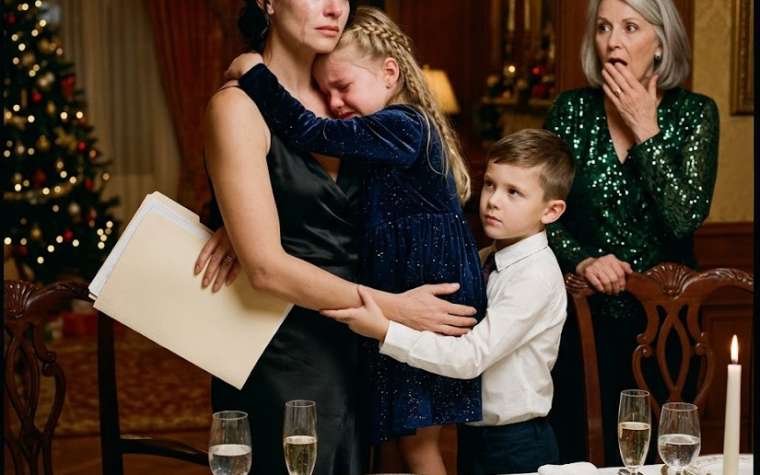
According to the reports, he told her Grandma had made a mistake.
He told her grown-ups sometimes misunderstood each other.
He told her he loved her.
Meadow asked him one question.
“Why did you tell her to keep going?”
He could not answer it.
The supervisor redirected him when he tried to say that everyone had been emotional.
At the next visit, Meadow did not ask again.
That silence frightened him more than her tears ever had.
Judith obeyed the no-contact order, although messages sent through Dustin showed little real understanding.
She continued describing her actions as an attempt at discipline.
At one point she wrote that she was willing to apologize for “the way the haircut turned out.”
I declined to pass that apology to Meadow.
The problem had never been the quality of the haircut.
It was the locked door.
The ignored pleas.
The hands forced down.
The father who knew his child was crying and said to finish anyway.
As the custody case continued, the messages mattered more than Dustin’s promises.
He began counseling.
Whether because he wanted more time with Meadow or because he finally recognized what he had done, I could not know.
The court did not ask me to decide whether he deserved redemption.
It asked what Meadow needed to be safe.
For once, that was the only question that mattered.
Her hair began growing back as soft gold fuzz.
Then came little curls around her ears.
One Saturday morning several months later, I found Meadow in the bathroom studying herself in the mirror.
She was not crying.
She rubbed both palms over the short curls and tilted her head.
“Mom?”
“Yes?”
“When it gets long again, do I have to grow it all the way back?”
The question surprised me.
“No.”
“Can I?”
“Yes.”
“Can I cut it short someday?”
“Yes.”
She turned toward me.
“So I decide?”
I felt my throat tighten.
“You decide.”
Meadow looked back at the mirror.
For a moment, she touched the place above her left ear where the tiny scrape had healed.
Then she smiled—not the bright performance adults sometimes demand from children after something painful, but a small private smile that belonged entirely to her.
“I think I’ll wait and see what I like,” she said.
That became our rule.
Not only about hair.
About hugs.
About clothes.
About whether she wanted to speak during counseling.
About which parts of what happened she wanted discussed and which belonged to her alone.
Dustin had believed authority meant making a child obey even when obedience required fear.
Judith had believed humility could be imposed by taking something a child loved.
They both missed the simplest truth.
Meadow had never needed to be taught that beauty was temporary.