But you came back asking the court to remove me from the only mother I’ve ever known.
You didn’t ask me what I wanted first.
Your lawyers talked about houses, schools, hotels, money, and opportunities.
Nobody on your side asked what it would cost me to lose my home.”
Isabella wiped her cheek.
“Daniel,” she whispered.
He shook his head gently.
“Please let me finish.”
She covered her mouth.
Daniel turned back to the judge.
“You asked where I want to live.
I want to go home with my mother.
María López.”
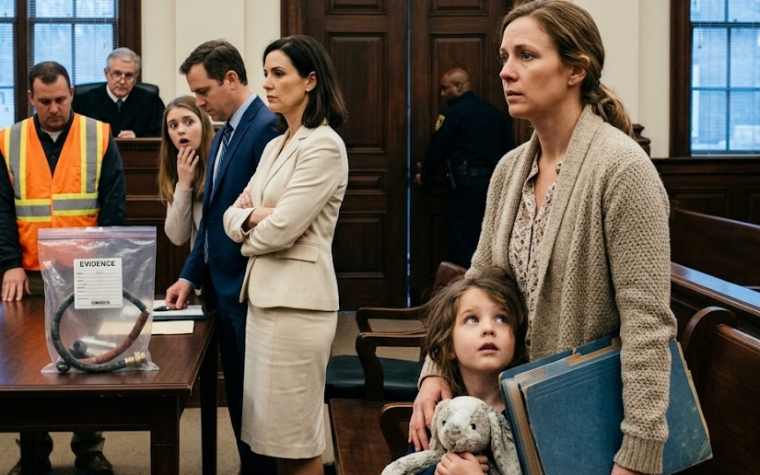
For several seconds, the courtroom was completely still.
Then the judge asked the question that seemed to break whatever remained of Isabella’s certainty.
“And what relationship, if any, do you wish to have with Mrs.
Cruz?”
Daniel looked at the woman who had given birth to him.
“I don’t know yet.”
Isabella flinched.
“But I want that decision to be mine.”
The judge nodded.
That distinction became the center of everything that followed.
Isabella had arrived believing the case was about whether she could prove maternity.
She had proved it.
But the court was not deciding a laboratory question.
It was deciding the future of a seventeen-year-old boy who had spent nearly his entire life in one stable home.
The social worker assigned to review our family situation was called back to testify.
She had visited our apartment several times over the years.
She described Daniel’s room, his school routine, the photographs in our hallway, his relationship with neighbors, and the consistency of my care.
Isabella’s lawyer tried to turn poverty into instability.
“Would you describe Mrs.
López’s residence as spacious?”
The social worker almost smiled.
“No.”
“Would you describe her financial resources as significant?”
“No.”
“Has Daniel had access to the kinds of opportunities Mrs.
Cruz could provide?”
The social worker paused.
“Not financially comparable opportunities, no.”
The lawyer spread his hands as though he had made his point.
Then the social worker added, “But stability is not measured in square meters.”
The lawyer’s smile disappeared.
She continued.
“Daniel has a secure emotional attachment to Mrs.
López.
His schooling is stable.
His medical care has been consistent.
His community ties are strong.
He identifies her as his mother.
Removing him against his expressed wishes would create significant emotional disruption, particularly when he is already approaching adulthood.”
The judge wrote something down.
Isabella stared at the table.
Her lawyer changed direction.
“Would contact with his biological mother necessarily be harmful?”