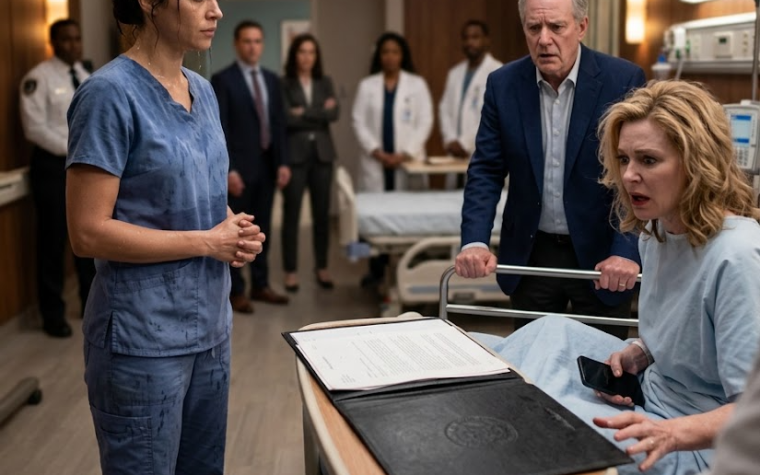
Machines surrounded her, but her eyes were clear.
I stopped several feet from the bed.
“Is he alive?” she asked.
“Yes.
He is improving.”
“Have you seen him?”
“Through the nursery glass.
I have not touched him.”
Something in her expression softened, but only for a second.
“You stayed.”
“Yes.”
“You do not get credit for arriving after the emergency.”
“I know.”
“You do not get to use this room to forgive yourself.”
“I know.”
Her eyes filled, though no tears fell.
“I called you three times after you left.”
I remembered the blocked number that appeared on my phone for weeks.
I had ordered my staff to filter every unknown call because I knew I would answer if I heard her voice.
“I saw them,” I admitted.
The pain in her face sharpened.
“You knew?”
“I did not know you were pregnant.
But I knew it might be you.”
She turned her face toward the window.
“That is worse.”
“Yes.”
I could have told her about threats, rivals, and the men who watched everything I loved.
I could have explained that staying near me carried danger.
But explanations had become the shelter I built around cowardice.
“I left because I was afraid,” I said.
“Not for you.
For myself.
Loving you gave my enemies a place to hurt me, so I hurt you first and called it protection.”
Brin looked back at me.
For the first time, I gave her no polished defense.
“What happens to Yara?” she asked.
“It is over.”
“And your empire?”
“I am dismantling it.”
She almost laughed, but pain stopped her.
“Men like you do not dismantle empires.”
“No.
Men like me usually make someone else pay for them.”
A nurse appeared in the doorway, signaling that my time was over.
I moved back.
Brin spoke before I reached the hall.
“I never wanted your money.”
“I know.”
“I wanted you to show up when leaving was easier.”
“I know that now.”
The paternity results arrived the next morning.
The probability was greater than 99.99 percent.
Our son was mine.
I did not celebrate.
The result felt less like a gift than a summons.