Jonah appeared in my doorway behind me.
For the first time since I had dragged him out of the snow, all the hardness left his face.
“Rose.”
She looked at him.
Three years of silence passed between them in one glance.
Then she crossed the yard.
Cutter backed away.
Rose did not even look at him until she reached the porch.
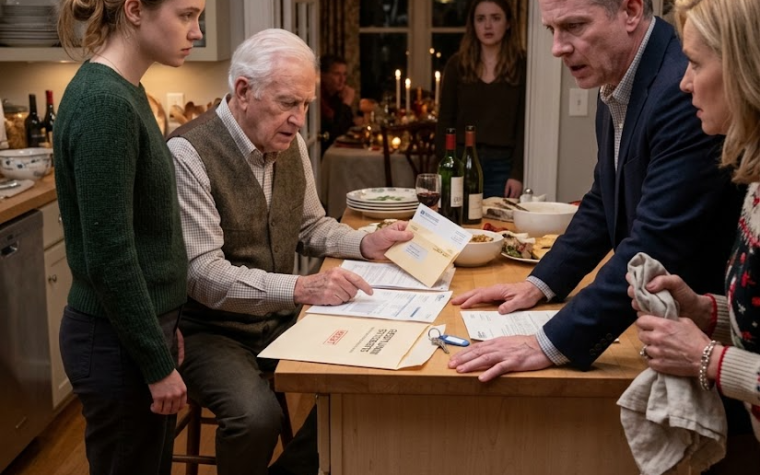
From beneath her coat she removed another oilskin packet.
“The originals,” she said.
Cutter found his voice.
“You expect these people to believe papers produced by a runaway woman and her murderous husband?”
Rose finally faced him.
“No.
I expect them to compare the parcel numbers with the deeds you filed.”
That was the moment Cutter lost control.
He began accusing everyone at once.
Rose was lying.
Jonah had forced her.
I had conspired with them because I hated him.
The railroad men had misunderstood.
The signatures were clerical errors.
Every explanation contradicted the one before it.
And then he made the worst mistake of all.
He pointed at my house and shouted that the copy hidden beneath my stove proved nothing.
Nobody moved.
I had told no one where I hid it.
Not Jonah.
Not Rose.
Certainly not Cutter.
The silence that followed was different from all the silences Blackpine had given Jonah over the years.
This one belonged to Calvin Cutter.
The town did not transform into something noble that afternoon.
People rarely change that cleanly.
Some defended Cutter because admitting the truth meant admitting how easily they had helped destroy Jonah’s name.
Others stared at the snow because shame is easier to carry when you refuse to look at the person you wronged.
But Rose’s records could be checked.
So they were.
Parcel by parcel.
Date by date.
Signature by signature.
Cutter’s land scheme unraveled because greed had forced him to leave too many numbers behind.
Transfers were challenged.
Families who believed they had lost property permanently discovered records that did not match what they had signed.
The railroad negotiations that Cutter expected to make him rich became evidence of how early he had known which land would become valuable.
He lost his office before spring.
Then he lost much of what he had acquired.
Blackpine could forgive cruelty when it was profitable.
It had more difficulty forgiving a man once his profit threatened everyone else’s property.
Jonah’s punishment had been harder to undo.
No document could return three years of whispers.
No public apology could erase children being frightened with his name.
But Rose was alive.
She walked through town beside him.
That simple fact killed the story Blackpine had preferred.
Some people apologized.