She had balanced one final block on top of her tower and was holding both hands beside it, terrified that touching it might make it collapse.
“You left my daughter alone outside a school during a storm.”
My mother sighed.
Again.
That same exhausted sound, as though my pain were an administrative problem she was tired of handling.
“Do not mix that up with this.”
“I’m not the one who mixed them.”
“What is that supposed to mean?”
“It means I want you to answer one question.
Did you treat my sister differently because she was your biological child?”
“No.”
The answer came too fast.
“Did you treat her children differently because they were your biological grandchildren?”
“Of course not.”
Another instant denial.
I turned a page in the folder.
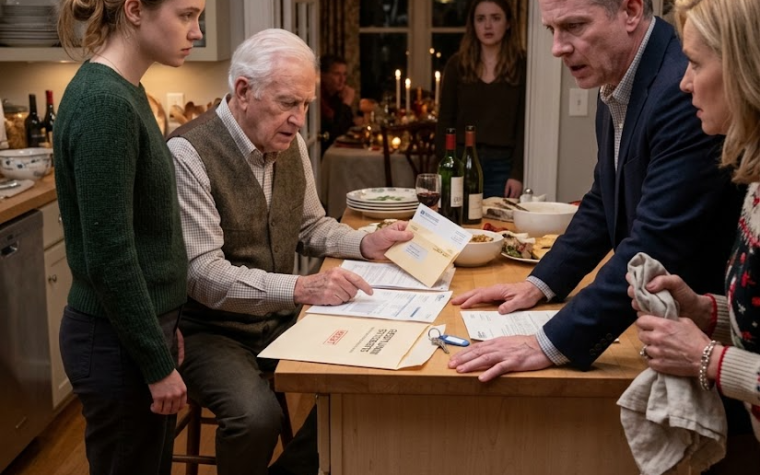
My attorney had included copies of messages and handwritten notes found among the financial papers my parents had given me permission to organize.
Most were ordinary reminders.
One was not.
It was old, written in my mother’s handwriting beside details about an estate plan.
The wording was short but unmistakable.
It distinguished between my sister’s “natural family line” and me.
I did not read it aloud.
I didn’t need to.
“Mom, I have your notes.”
She stopped speaking.
For the first time since this began, the silence on the other end did not feel dismissive.
It felt afraid.
“What notes?” she finally asked.
“The ones you forgot were in the documents you asked me to organize.”
My father’s voice appeared in the background.
“What did she say?”
My mother covered the receiver, but not well enough.
“She has the estate papers.”
Then the line went dead.
I sat there for several seconds, listening to the empty connection.
Emma’s tower fell.
She gasped, then laughed and started rebuilding it.
That simple sound steadied me.
I had spent years translating my parents’ behavior into kinder explanations.
Mom was tired.
Dad was old-fashioned.
My sister needed more help.
Her children lived closer.
My work schedule was difficult.
Emma was sensitive.
There was always a reason that required me to absorb the disappointment and move on.
I had become very good at moving on.
I had also become very good at paying bills.
When my parents wanted a better condo after retirement, I covered the mortgage difference they could not comfortably afford.
When the old car failed, I helped finance the SUV.
When medical expenses rose, I created an account for recurring costs.
When my mother complained that budgeting made her feel anxious, I automated most of it.
I had effectively built a financial cushion underneath two people who treated my daughter like excess baggage.
Stopping that support was not revenge.
It was the end of a subsidy.