I answered none of them.
The seventh message was different.
I treated you as if your worth depended on whether I could brag about you.
I am ashamed.
I do not expect you to forgive me.
I read it twice and saved it.
Saving it was not forgiveness.
It was simply the first apology she had offered without demanding something in return.
My parents adjusted to the new financial reality slowly.
Dad sold the luxury car he could no longer justify.
Mom canceled memberships she had pretended were essential.
Neither of them lost the house.
For several months, our conversations remained brief.
Then my mother came to Roosevelt’s spring community dinner.
She did not arrive in polished clothes or ask where the important donors were sitting.
She tied on an apron and spent two hours pouring drinks, clearing trays and listening to Bryson explain fractions with paper pies.
She did not ask me whether that earned forgiveness.
That mattered.
At the public launch of the Metro partnership, the district superintendent finally announced the foundation’s chair by her full legal name.
“Isabelle M.
Wright.”
My parents sat near the back of the auditorium.
There were no reserved family seats.
I walked to the microphone wearing the same inexpensive navy dress I had worn while teaching that morning.
Behind me stood counselors, literacy specialists, art teachers and children holding paint-stained cardboard stars.
I did not speak about inheritance or betrayal.
I spoke about Bryson.
I spoke about the afternoon he realized he was not stupid.
I spoke about teachers who stayed late without applause, counselors working from supply closets and families who needed help without being made to feel small for accepting it.
Then I looked toward the back row.
“My students call me Miss Pearson,” I said.
“The documents call me Ms.
Wright.
Neither woman is more real, and neither life is smaller.”
The applause rose slowly, then filled the auditorium.
My mother cried.
My father lowered his eyes.
I did not feel victorious.
I felt visible.
For years, my family had mistaken silence for emptiness, modesty for failure and teaching for a life without power.
They finally understood that I had never been hiding because I was ashamed.
I had been protecting the part of myself they had never learned to value.
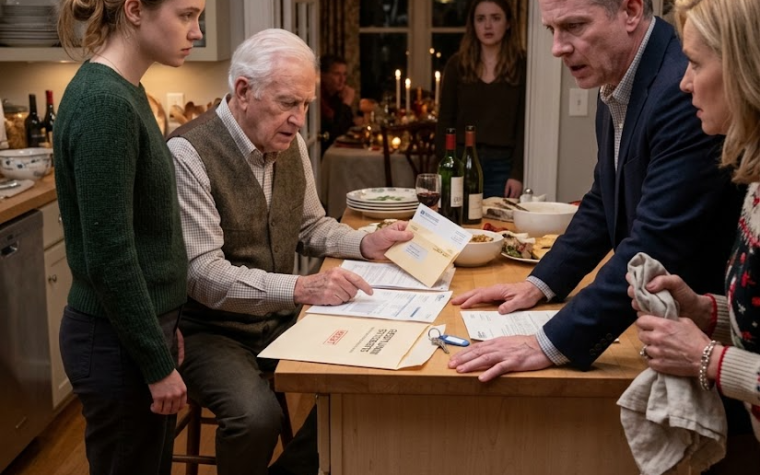
And when the truth finally opened in front of them like a folder on a kitchen counter, it did not transform me into someone important.
It only forced them to see that I had been important all along.