“How did I provoke you?” I asked.
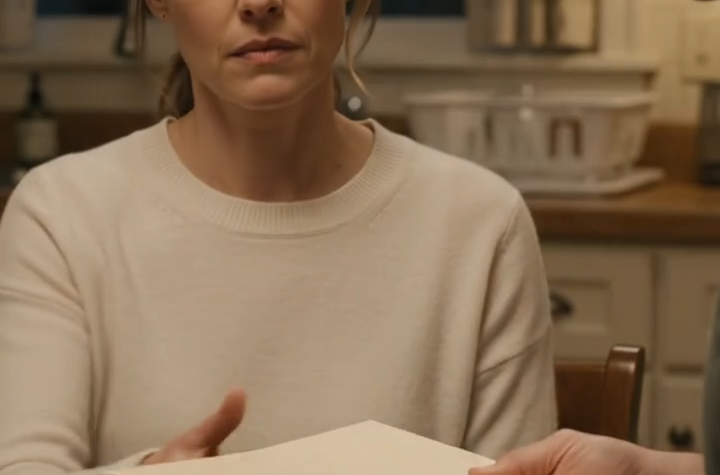
Marjorie’s mouth tightened.
“You told me I had no authority over your salary.”
“That was true.”
“You live under our roof.”
“I paid most of the household expenses.”
“You were disrespectful,” she snapped.
“You waved those bank statements in my face and accused this family of using you.”
Ryan moved between us.
“That’s enough.”
But Marjorie had spent three days rehearsing her innocence, and now anger was pulling the truth out of her faster than caution could push it back.
“I barely touched her,” she said.
“One strike to the leg, and suddenly she acts as if I tried to kill her.”
Howard closed his eyes.
Ryan stared at his mother.
The nurse’s expression did not change, but I saw her thumb press the call button.
I swallowed against the pressure building in my chest.
Hearing Marjorie admit it did not feel triumphant.
It carried me back to the kitchen—the rolling pin rising, Howard watching, the impact exploding through my leg.
I kept my voice steady.
“What happened after you struck me?”
Marjorie looked toward Ryan, finally understanding that she had stepped into something she could not reverse.
Ryan answered for her.
“We were going to take you to the hospital in the morning.”
“You heard me begging.”
“You were not in immediate danger.”
“My leg was broken.”
“We didn’t know that.”
“I could not stand.”
“You were being dramatic.”
“What did you tell your parents while I was lying there?”
His eyes narrowed.
“I don’t remember.”
“You said I needed to be put in my place.”
Marjorie looked away.
Howard’s arms dropped to his sides.
Ryan leaned over the bedrail.
“You were listening to a private conversation.”
The absurdity of his answer almost made me laugh.
He was not denying the words.
He was accusing me of hearing them.
“So you said it?”
He realized the mistake too late.
“I said you needed to understand consequences,” he replied.
“That is not a crime.”
The door opened behind him.
Two hospital security officers entered first.
An investigator followed them, holding a small body camera against the front of a plain jacket.
Ryan straightened so abruptly that his hip struck the bedrail.
“What is this?” he demanded.
“You cannot secretly record us.”
The investigator looked at me, not him.
“Ms.
Claire Whitmore consented to the recording,” she said.
“The device is hospital property, placed in her room with her permission.”
Ryan turned toward me.