It grows around routines.
It teaches everyone where to sit and what to expect.
Eventually nobody remembers who made the rule.
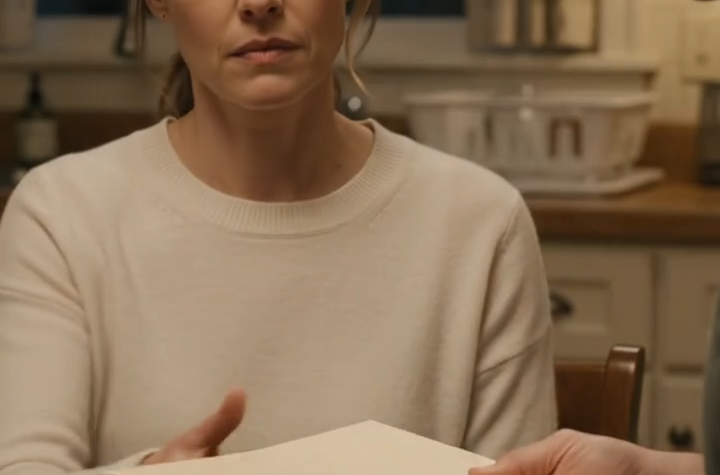
“I’m not saying you sat down tonight and decided to disrespect me,” I said.
“I’m saying none of you had to decide anything.
You already knew what would happen.”
Someone folded their arms.
“It’s just dishes.”
There it was.
The sentence I had been arguing with inside my own head for years.
Just dishes.
I looked at the person who had said it.
“Then they should be easy for everyone to help with.”
Their arms loosened.
Nobody had an answer.
I stood and walked to the stove.
The pan still held the traces of the meal I had prepared.
I touched its handle but didn’t pick it up.
“The food didn’t appear,” I said.
“The table didn’t set itself.
Nobody’s plate filled itself.
And none of this will clean itself.
There is a person behind every comfortable thing that happens in this house.”
I turned back toward them.
“For too long, that person has been me.”
One of them leaned forward.
“You could have asked for help.”
That sentence hurt more than I expected.
Not because it was entirely wrong.
Because part of it was true.
I had not asked.
I had spent years anticipating everyone’s needs and telling myself that if I had to request help, the help somehow meant less.
I had also feared what would happen if I stopped.
Would they call me difficult?
Ungrateful?
Overly sensitive?
Would a simple request turn into an argument about everything except the request itself?
So I had stayed quiet.
And quiet had consequences.
“You’re right,” I said.
The room shifted.
They hadn’t expected agreement.
“I should have spoken sooner.”
Someone relaxed slightly, as if they thought the problem had just been solved in their favor.
I continued.
“But needing to ask every time is part of the problem.
You don’t ask me to notice when your glass is empty.
You don’t ask me to notice when the table needs food.
You don’t ask me to notice that someone needs a clean plate.
I notice because I live here too.”
I pointed gently toward the table.
“You live here too.”
No one spoke.
The laughter from earlier seemed very far away now.
I sat again.
“I don’t want anyone to feel guilty for eating dinner.