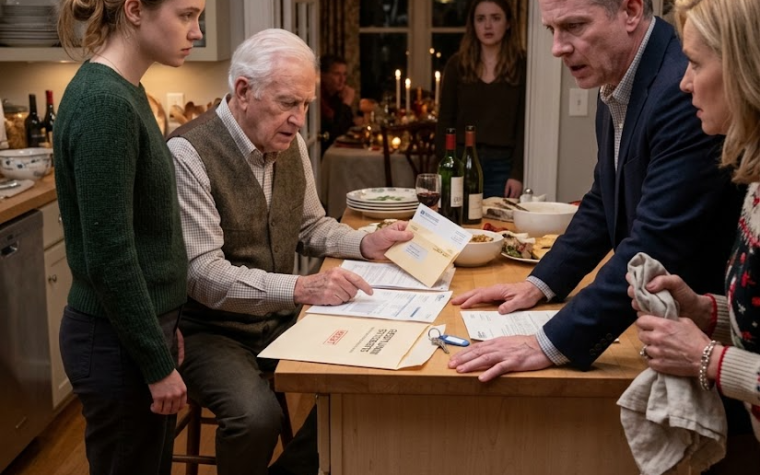
“Chase was drunk.”
I waited.
“He’s twenty-one.”
I raised my eyebrows.
Nate realized, too late, that this argument worked against him.
“You know what I mean,” he said.
“Actually, I don’t.
Is he an adult when he wants tequila and an apartment, but a child when he insults the person paying for them?”
Nate rubbed his forehead.
“Nobody thinks you’re pathetic.”
“He called me sad.
You laughed.”
“It was a joke.”
“Then why are you here?”
He stared at me.
I continued.
“If it was only a joke, nothing important happened.
I left dinner.
You all kept eating.
Now I’m not paying some bills that were never mine, and apparently everyone is panicking.”
His jaw tightened.
“You’re punishing Chase.”
“No.
I’m agreeing with him.”
That made him angry.
He stood and began pacing.
He said families helped each other.
He said I had always offered.
He said changing everything without warning was cruel.
I reminded him that nobody had warned me that I was the family joke.
He stopped pacing.
For a moment, neither of us spoke.
Then Nate made the mistake that finally removed whatever guilt I still carried.
“Grace, what else are you going to spend the money on?”
The room went still.
He seemed to hear himself only after the words were already out.
I looked at my brother and understood something that hurt far more than Chase’s drunken insult.
Chase had not created this attitude.
He had inherited it.
In Nate’s mind, because I didn’t have the same household obligations he did, my income contained an unspoken family surplus.
Money I didn’t use according to his definition of a meaningful life was apparently available for redistribution.
“Go home, Nate,” I said.
His face changed.
“Grace—”
“Go home.”
He left.
That evening, I received my first genuine apology.
It came from Chase.
Not perfect.
Not eloquent.
But different.
He said he had been thinking about the dinner.
He admitted he had known I paid far more than his friends’ aunts ever would.
He said he had gotten used to it and turned that comfort into something he felt entitled to mock.
Then he wrote the sentence I had been waiting for without knowing I was waiting for it.
He said the laughter had made him feel clever, and he had cared more about getting another laugh than about what his words would do to me.