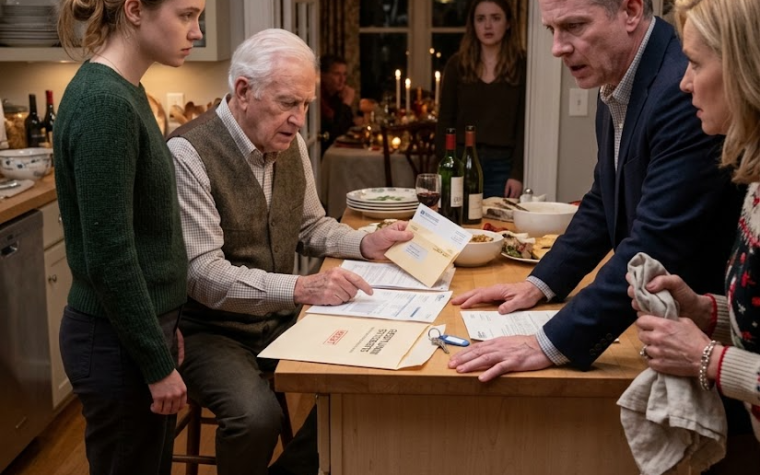
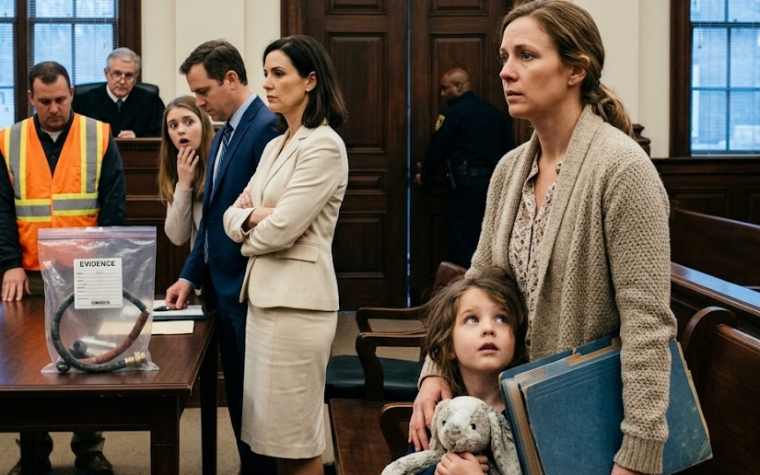
That was all.
No speech about betrayal.
No explanation about money.
A seven-year-old did not need to carry the ugliness adults had created around him.
He needed to heal.
So I let the adults carry their own consequences.
Evelyn sent one final message several days later.
“I hope you’re happy.
Chloe’s wedding is ruined and everyone is treating us like criminals.”
I read it twice.
Then I typed a response.
“Leo is recovering.”
Nothing else.
She never asked for an update about him.
That was the last answer I needed.
The wedding still happened, but not as Chloe had planned it.
The expensive upgrades disappeared.
The money she had expected to use was no longer there for her to spend without questions.
Some relatives attended.
Others did not.
I stayed at home with Leo.
On the morning of the wedding, he was sitting at our kitchen table eating cereal in pajamas, arguing that two marshmallows stuck together should legally count as one marshmallow.
I laughed harder than the joke deserved.
Maybe because a week earlier I had been listening to machines breathe and beep beside him.
Maybe because $15,420, a designer dress, a fraudulent document, and every cruel phone call suddenly seemed very small compared with the sound of my son complaining about breakfast.
Months later, the details of the investigations were still being handled through the proper channels, but my part had become quiet.
My accounts were secure.
The unauthorized access was gone.
The fundraiser was gone.
The relatives who had donated knew Leo had never received that money.
And I stopped financing emergencies that somehow always belonged to Evelyn or Chloe.
The strangest change was the one I noticed at the hospital during Leo’s follow-up appointments.
For weeks after his surgery, every time the automatic doors opened, I instinctively looked up.
Some part of me was still expecting my mother to walk through them late.
Still expecting Chloe to appear carrying flowers and an apology.
Still expecting the family I had spent years protecting to become the family they claimed to be in photographs.
They never did.
At one follow-up appointment, those doors opened and Leo came walking back from a test beside a nurse, moving carefully but under his own strength.
He saw me and grinned.
“Mom, I beat you back.”
I stood and held out my hand.
“You sure did.”
He took it.
The doors closed behind him.
And for the first time, I did not look past my son to see who else might be coming.