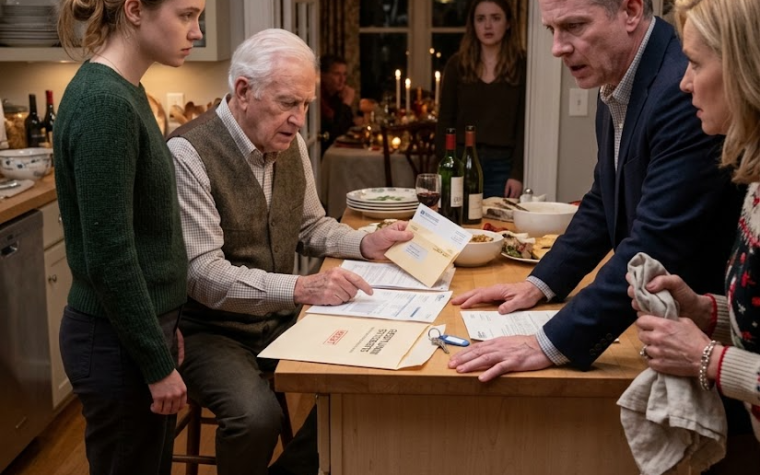
“You’re trying to take advantage of us.”
For sixteen months, I had imagined what it might feel like to hear my father say something like that.
I thought I would feel triumphant.
Instead, I felt tired.
“When I needed $50,000,” I said, “you told me business doesn’t work on feelings.
You wanted proof.
You wanted protection.
You wanted to know what you were getting for your money.”
He said nothing.
“I’m using the same standard.”
Mom finally touched the proposal.
“And if we say no?”
“Then you say no.
It’s your property.
I’m not forcing you to sell it.
You can pursue another solution.”
That mattered to me.
I didn’t want to become the person Luke would later describe online.
I didn’t want to seize anything.
I didn’t want my parents cornered into signing a paper they didn’t understand.
So my attorney had written the offer with time for independent advice, appraisal review, and their own counsel.
No tricks.
No hidden transfer.
No revenge clause.
Just terms.
Luke picked up the packet and flipped through it.
“And what do I get?”
There it was.
Not what happens to Mom and Dad.
Not how long they can remain.
Not whether the price is fair.
What do I get?
Dad looked at him sharply, but Luke was already angry.
“You all said this place would stay in the family.”
“It would,” I said.
“With you.”
“Yes.”
“So I’m supposed to watch you take the company and the house?”
I felt something inside me become very still.
“Luke, I didn’t take the company.
I built it.”
He opened his mouth.
I continued.
“And I haven’t taken this house.
Mom and Dad own it.
They asked me for financial help.
I gave them an offer they can accept or reject.”
“You planned this.”
“I got their attorney’s email three days after you tried to shame me online.
I planned nothing before that.”
Mom turned toward him.
“Luke, enough.”
He stared at her.
It might have been the first time in years she had said the word to him with any force.
Dad read the proposal in silence.
The meeting ended without a decision.