Years passed.
The mortgage was paid.
Declan’s business recovered.
Children were born, marriages ended, cousins moved away and returned.
The family learned to seat us apart without discussing why.
Mam kept asking for more time.
Then age made every confrontation feel cruel.
By the end, the secret had become part of the house itself.
It lived in the careful gaps between chairs, in the route of the gravy boat, in the way Declan entered through the front door while I used the kitchen.
When Mam died, the promise died with her.
Or so Declan had assumed.
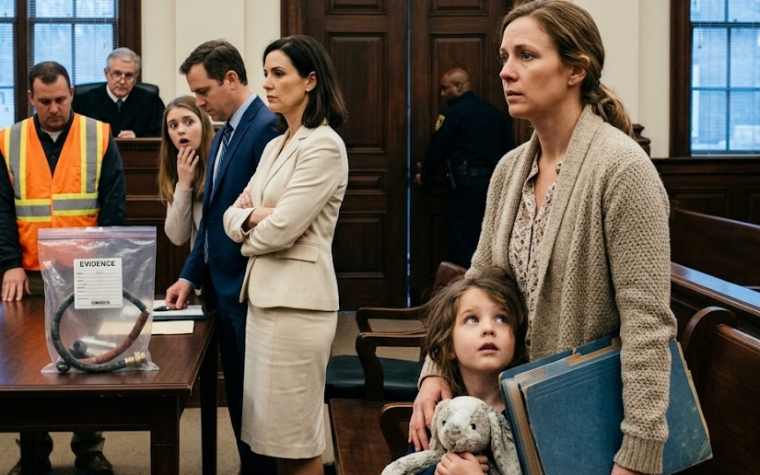
At the table, he stared at the envelope.
“You’re not reading that,” he said.
“It was given to me with her papers.”
“It has my name on it.”
“Then you can open it.”
I slid the envelope toward him.
He did not take it.
The lawyer spoke through the phone.
“Mr.
Kelleher, the contents have been photographed and preserved by the executor.
Opening the original will not affect the record.”
Declan’s eyes narrowed.
“You’re her lawyer, not mine.”
“That is correct.”
“And you’re accusing me of fraud in front of my family.”
“I am describing the documents.”
Declan stood again.
“This dinner is over.”
Nobody moved.
He looked at the relatives one by one.
“I said it’s over.”
My cousin folded her arms.
Aunt Nora remained seated.
For the first time in my memory, the room refused him without a word.
Declan reached for the envelope.
He tore it open with one sharp movement and unfolded the letter.
Mam’s handwriting covered three pages.
He read the first lines standing up.
Then he sat.
I watched his eyes move across the page.
Mam had written that she knew about the forged transfer.
She had described the night Declan admitted copying my signature.
She had recorded his promise to correct the title once his business stabilized.
She had also written that every mortgage payment after March 1987 had come from me.
But the letter was not angry.
That made it worse.
Mam wrote that she loved him.
She wrote that fear had made her weak and silence had made the family cruel.
She wrote that she had allowed Maeve to carry a shame that belonged to someone else.
Near the end, she addressed the house.
It belongs to both of you, she wrote.
Not because either of you deserves a prize, but because your father and I intended it that way.
If you try to take Maeve’s half after I am gone, then you are not preserving this family.
You are finishing the damage I was too frightened to repair.
Declan lowered the letter.