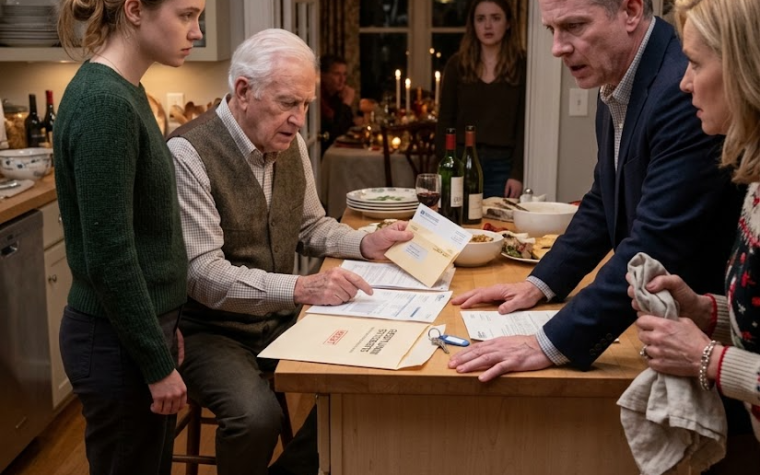
His face was grey.
My aunt began to cry silently.
He looked at me, not past me.
“Why didn’t she give me this?”
“She tried.”
“When?”
“Three times that I know of.”
He shook his head.
“No.”
“You refused to discuss the deed.”
“She could have made me.”
The words escaped him before he could hear what they meant.
Aunt Nora wiped her cheek.
“She was afraid of you,” she said.
Declan turned toward her with genuine shock.
“Mam was never afraid of me.”
“She was afraid of what would happen if you were exposed.”
“That’s not the same thing.”
“No,” I said.
“But it was enough.”
He folded the letter once, then unfolded it again.
“You let everyone believe I stole from her.”
“You did steal from her.”
“I was going to replace the money.”
“You forged my name.”
“I was trying to save the business.”
“You used the house as if it belonged only to you.”
“I stayed,” he snapped.
“You left me here to handle everything.”
There it was: the wound beneath the wrongdoing.
After Dad died, Declan had remained in the house.
He took Mam to appointments.
He repaired the roof.
He cleared snow from the path and replaced the boiler.
He built his entire identity around being the son who stayed.
My mortgage payments did not fit that identity.
My ownership did not fit it.
So he had erased both.
“You stayed,” I said.
“That does not mean I vanished.”
“You came on Sundays.”
“I came whenever she called.”
“You had your own life.”
“So did you.”
“I gave up more.”
“Then you should have said you were angry.
You should not have forged my name.”
His hand struck the table.
The plates jumped.
It was the first open violence the grudge had produced in thirty-nine years, and even that was only a palm against wood.
But the sound broke something.
My cousin stood and began clearing the children’s places from the far end, though the children had gone home hours earlier.
Aunt Nora moved the crystal water jug away from Declan’s reach.
The family was no longer pretending this was ordinary.
The lawyer waited until the room settled.
“There is another issue,” he said.