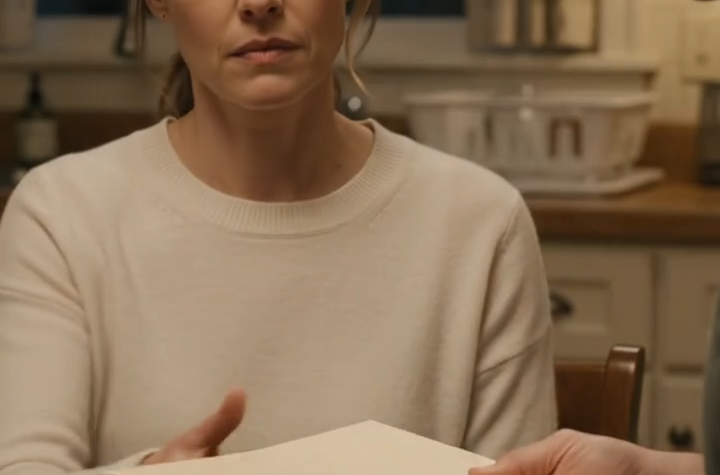
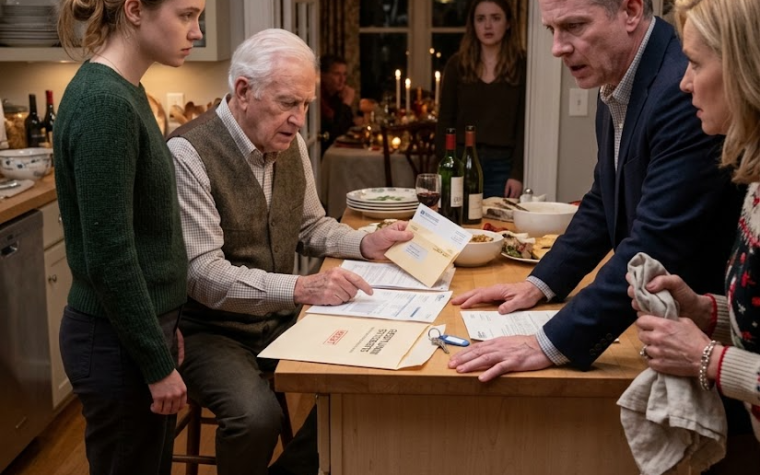
“How did you hide it?”
His eyes moved toward Martha and then away.
“She went to get more white strips.
I put it in the bag and pushed it under the soft part.
She didn’t see.”
The white strips were fiberglass casting material.
Martha had not taken him to an orthopedic surgeon.
She had built the cast herself, layer by layer, around a chain and padlock she could not remove without exposing what she had done.
The original injury had happened while he pulled against the chain, trying to reach the basement door.
His wrist had swollen so quickly that the padlock would no longer slide over his hand.
Instead of calling for help, Martha had wrapped the arm and invented the story about the tree.
The boy had understood that the cast would eventually have to be opened.
He had hidden the only witness he could create inside it.
A nurse from the operating team began moving the bed.
Martha stepped forward again.
“You cannot take him anywhere without my permission.”
The security officer blocked her path.
“Emergency treatment does not require a parent’s permission when delay threatens the child’s life.”
Martha pointed at me.
“She planted that recorder.
She hates me.
She decided I was guilty the second I walked in.”
I looked at the coffee stain on the counter where her cup had fallen, the chain on the floor, and her son’s blue fingertips.
“I decided your child needed treatment,” I said.
“The evidence came out of the cast.”
The operating team pushed the bed toward the door.
As he passed me, the boy lifted his good hand.
I took it.
His fingers were cold.
“Are they going to make me go back?” he asked.
“No,” I said.
It was not a promise doctors usually had the authority to make.
That afternoon, I made it anyway.
The operating room doors closed behind him at 4:52 p.m.
Police arrived seven minutes later.
Martha immediately demanded an attorney.
Before they separated us, she tried one final version of the story.
She said the chain had been part of a game.
Then she said the boy had locked himself.
Then she said she had found him that way and panicked.
Each explanation contradicted the last.
A police officer asked her why she had covered the chain with fiberglass instead of calling an ambulance.
Martha folded her arms.
“Because people like you twist everything mothers do.”
The officer pointed toward the evidence tray.
“Did you tell him no doctor would ever see the lock?”
She said nothing.
Hospital registration searched every orthopedic practice Martha named.
None had treated her son.
Our medical records department found no recent X-rays, no fracture follow-up, and no prescription connected to the injury.
The cast had never been placed by a medical professional.
The first imaging results from surgery showed that the fracture was nearly four weeks old.
The bone had begun healing in the wrong position.
Pressure from the padlock had damaged tissue around the wrist, while the sealed cast had trapped moisture and infection against the skin.
The surgeon called me from the operating room.
“The hand is still receiving some blood,” she said.