A girl named Nora but not Nora’s last name.
The adults around her believed those images came from dreams or trauma.
When no family was identified, she entered foster care under a temporary name.
She had spent years trying to build a life around the blank spaces.
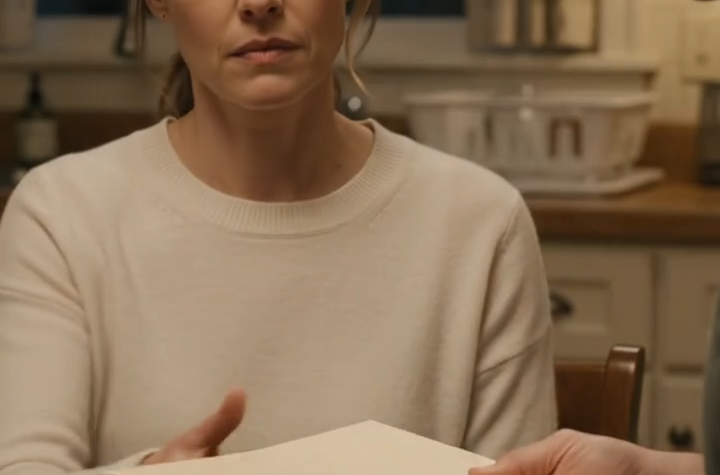
“Why didn’t you come home when you were older?” I asked.
“I didn’t know where home was,” Emily replied.
“Not completely.”
Several months earlier, records from the closed youth facility had been digitized.
Emily received copies of her childhood intake files and saw the exact location where the road crew had found her.
She searched the location online, then expanded outward town by town.
Eventually, she found an archived newspaper photograph from the first anniversary of her disappearance.
The photograph showed me standing beside a tree covered with white ribbons.
Nora stood behind me holding a daisy.
Emily recognized us both.
She found Nora through an old article about the adoption.
Three nights earlier, Nora had received a message containing no greeting and no explanation.
It asked one question.
What did your mother call pancakes when the edges burned?
Nora knew the answer because Emily had told her dozens of times.
Moon cakes.
They spoke by phone for six hours.
Nora asked about the scar beneath Emily’s chin, the loose floorboard in her bedroom, and the song my wife used to hum while washing dishes.
Emily answered everything.
The next morning, Nora drove several hours to meet her.
She still did not tell me.
“I wanted proof,” Nora said.
“I had already destroyed enough by speaking too little.
I couldn’t destroy you by speaking too soon.”
She arranged an emergency private DNA test using a sample from an old medical kit of mine that remained sealed in the house.
The preliminary result showed a parent-child match.
Official testing would still be required, but Nora no longer doubted who Emily was.
She brought her home that night.
I looked from one daughter to the other.
Relief should have erased everything else.
It did not.
Anger remained.
“You knew about the pump house,” I said to Nora.
“You knew which way she went.”
Nora nodded, tears falling silently.
“We lost hours because you lied.”
“I know.”
“You watched me search for ten years.”
“I know.”
“You let me adopt you while you carried this.”
Her face collapsed.
“I thought telling you would make you stop loving me.”
The words struck harder than any excuse could have.
For ten years Nora had placed a daisy on Emily’s pillow, not because she knew Emily was alive, but because she believed one terrified sentence had killed her only friend.
The town’s hatred had convinced her that confession would not sound like fear.
It would sound like guilt.
My brother’s voice returned to me: Stop protecting her.
We had demanded the truth from a child while proving that the truth would destroy her.
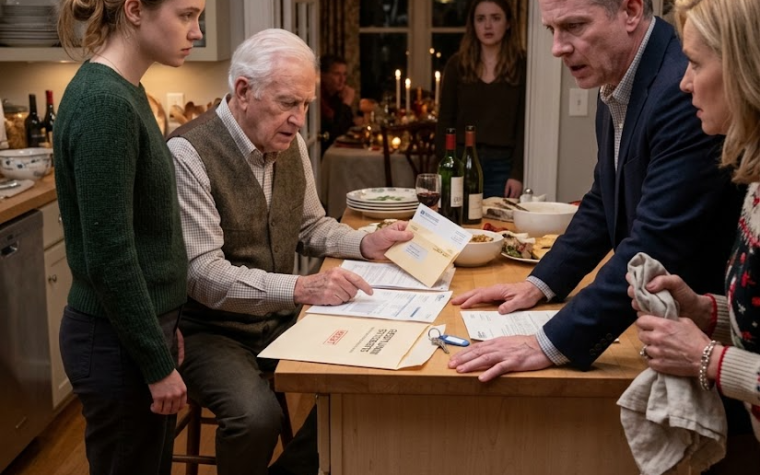
Emily reached across the table and took my hand.
“I told her to promise,” she said.
“I was the one who created the plan.
Nora came back because she was trying to get help.