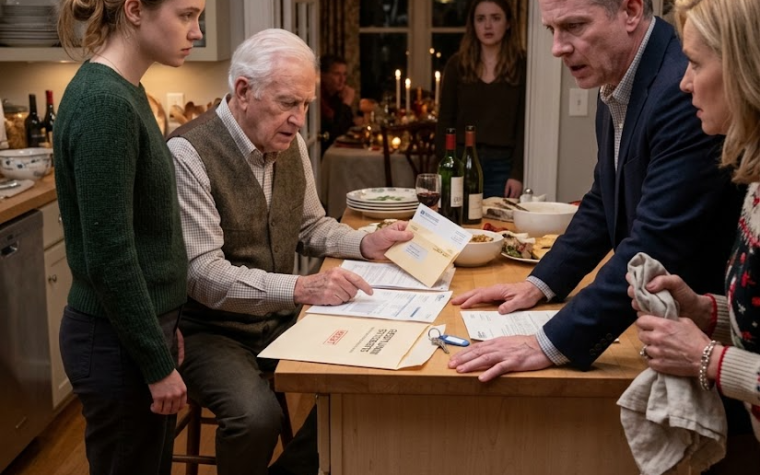
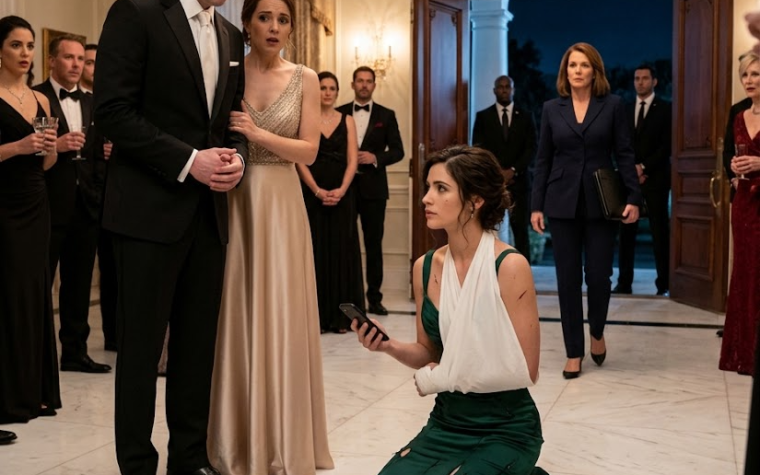
A murmur spread among the nearest tables.
That was the part Adrian could not dismiss.
Everyone in the room knew men like him: men who considered details beneath them until the details became handcuffs.
His mother rose from her chair.
“Mara, enough.
Whatever happened between you and Adrian, causing a scene at his wedding is beneath you.”
I turned toward her.
“I was eating my salad when your son put my name into a microphone.”
The waiter beside table nineteen looked down quickly, hiding something close to a smile.
Celeste gripped the notice.
“Why serve this tonight?”
“I had planned to let counsel deliver it privately on Monday.”
That part was true.
The fund’s review committee had already approved acceleration after weeks of unsuccessful discussions with the clinic’s representatives.
Celeste’s advisers had delayed, deflected and assumed the lender would extend again.
Then Adrian sent me the wedding invitation.
The card had arrived in a velvet box with a handwritten note: You should see what success looks like.
I came because I wanted to know whether he had changed.
By the time he joked about my income, I had my answer.
“You were going to recall it anyway?” Celeste asked.
“Yes.”
“And you waited until my wedding to tell me?”
“I waited until your husband used this room to announce that I was poor, and you laughed while raising a glass to an empire my capital kept alive.”
Celeste flinched.
Adrian stepped forward.
“She is jealous.
That is all this is.
She could never stand seeing me happy.”
I looked at the orchids, the gold monogram and the hundreds of candles burning around a dance floor built for their first dance.
“Then this should be easy,” I said.
“Pay the note.”
He had no answer.
My phone vibrated again.
I read the message, then held the screen where only Celeste could see it.
The lender-controlled accounts had been frozen according to the security agreement.
Payroll, patient refunds and medically necessary expenses remained protected under a carve-out my attorney had insisted upon.
Expansion spending, owner distributions and nonessential transfers were suspended.
Celeste read the message and closed her eyes.
At that moment, the ballroom’s event director approached.
She was trying to appear invisible, but her expression had the strained politeness of someone carrying bad news through a room full of powerful people.
“Dr.
Voss,” she said quietly, “may I speak with you regarding the final venue transfer?”
Celeste did not move.
The event director continued in a lower voice.
“The scheduled payment from your holding account was rejected.
We will need another form of payment before the after-party extension begins.”
Adrian stared at her.
“What do you mean, rejected?”
The woman’s eyes flicked toward the bank notice.
“The transfer did not clear.”
The silence broke into whispers.
The wedding had already cost more than most homes.
Dinner was paid, but the remaining venue balance, band extension, overnight security, floral removal and several vendor payments were scheduled to settle after the reception.
Celeste had arranged the transfers through a holding company covered by the lender’s collateral agreement.
Now that account was locked.
Adrian turned to Celeste’s father.