“I did not know.”
“That is the problem,” Celeste said.
“You never know anything you think is beneath you.”
Her words landed harder than a shout.
Adrian’s face reddened.
“Do not blame me because you signed a bad deal.”
Celeste went still.
Until then, she had been fighting the notice.
Now she looked at her new husband as if he had become another liability on the page.
Her father asked for the microphone.
Adrian refused to give it to him.
The bandleader removed his hands from the piano.
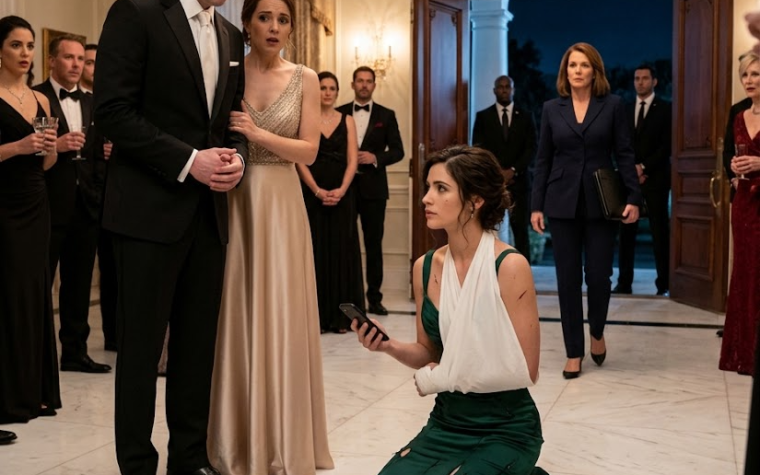
Servers began moving along the edges of the room, uncertain whether to clear plates or wait.
The orchids remained perfect above us, absurdly beautiful against the collapse beneath them.
Celeste called her attorney.
She spoke for less than a minute before asking the question that mattered.
“Can they do this?”
She listened.
Then she sat down in the nearest chair.
Her attorney had confirmed everything.
The recall was valid.
The guarantee was valid.
The freeze was valid.
No court order was required to exercise the lender’s contractual control over the pledged accounts.
When she ended the call, Adrian crouched beside her.
“We will fight it.”
“With what money?” she asked.
He looked toward her father.
Her father shook his head once.
“I will protect my daughter,” he said.
“I will not conceal her obligations or finance your performance.”
The event director returned with a payment authorization form.
Celeste’s father guaranteed enough to keep dinner service running for another hour, but the after-party was canceled.
The band packed away its second set.
The imported champagne stopped flowing.
The private lounge was closed before a single guest entered it.
No one announced those changes.
Everyone noticed.
I did not stay to watch the room empty.
My attorney and I crossed the ballroom toward the service doors.
As I passed table nineteen, the waiter held out my coat.
“For what it is worth,” he murmured, “the salad was terrible.”
I laughed for the first time that night.
Behind me, Adrian called my name.
I did not turn around.
The consequences did not arrive all at once.
Real consequences rarely do.
Over the next ten days, Celeste approached five lenders.
Two declined immediately.
One offered refinancing at a rate that would have consumed most of the clinic’s profit.
The remaining lenders required new equity, personal collateral and control provisions even stricter than ours.
The twenty million could not be wished away.
Celeste’s father assembled advisers and tried to negotiate.
He was influential, but influence could not erase a signed guarantee.
The hospital board also required him to recuse himself from any discussion involving the clinic after the conflict became known.
Adrian called me seven times.