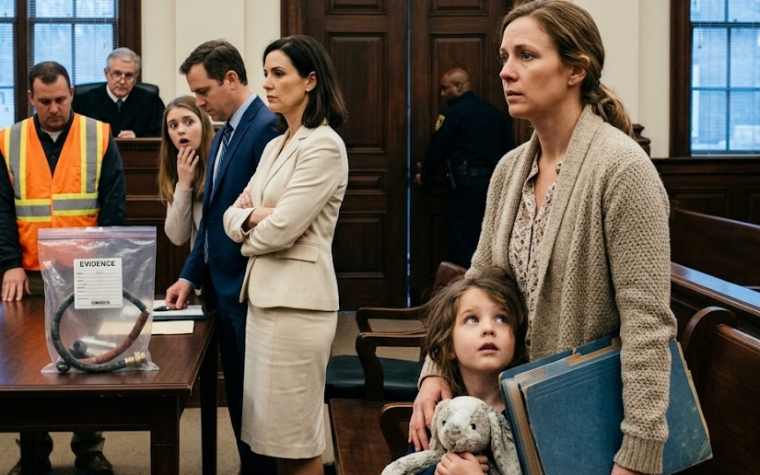
Judge Elaine Wexler lowered her eyes to the page beneath Hector Navaro’s name.
Nobody moved.
My father, Miguel Reyes, was still half-turned toward his lawyer, waiting for an explanation Navaro clearly did not want to give him.
Matteo sat behind me with both hands locked around the edge of the bench.
Reporters had stopped pretending not to stare.
Judge Wexler read the first line silently.
Then she looked at Navaro.
“Case file 89B,” she said.
“You remember it.”
Navaro’s jaw tightened.
“Your Honor, I object to the characterization of material that may not even be admissible in this proceeding.”
“You may object after I finish determining why your name appears in a restricted military inquiry connected to evidence you introduced yesterday.”
That ended the argument.
My father looked from the judge to Navaro.
“What inquiry?”
Navaro did not answer him.
I had seen that expression before.
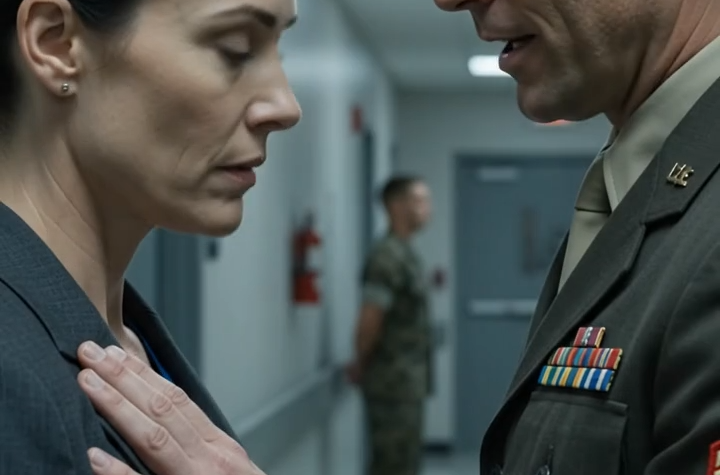
Not in court, but years earlier, in a hearing room where Navaro had believed rank, reputation, and polished language could protect him from the paper trail underneath his hands.
Back then, I had been one of the officers assigned to help assemble the record.
I had not prosecuted him.
I had not sentenced him.
I had done something simpler and, to a man like him, more unforgivable.
I had documented what happened.
The inquiry concerned unauthorized access to protected records, selective use of confidential material, and conduct serious enough to trigger professional review.
The details had been buried beneath classification rules and sealed proceedings, but the finding itself had survived.
So had Judge Elaine Wexler’s signature.
At the time, before taking the bench in San Diego, she had served in a legal review capacity connected to the disciplinary process.
She knew the case number.
She knew the pattern.
And now Navaro had walked into her courtroom carrying another conveniently clipped recording from another restricted archive.
Judge Wexler turned to me.
“Ms.
Reyes, did you recognize the source characteristics of the recording when it was played?”
“Yes, Your Honor.”
“How?”
“Military hospital archive audio has a particular compression artifact.
I’ve worked with protected records systems.
The distortion is recognizable.”
Navaro stood.
“She is speculating.”
The judge did not look at him.
“Sit down, Mr.
Navaro.”
He sat.
My father’s face had lost the anger that had carried him through the previous hearings.
Confusion was replacing it, and confusion frightened him more than rage ever had.
Judge Wexler continued.
“The court requested Ms.
Reyes’s service file to establish her location during the period in which you allege she exerted sustained pressure on her mother.”
She lifted another page.
“The service record establishes that Ms.
Reyes was assigned away from San Diego during several of the dates identified in your filings.”
My father blinked.
“That’s not possible,” he said.
It was the first thing he had said all morning that did not sound rehearsed.
Navaro leaned toward him.