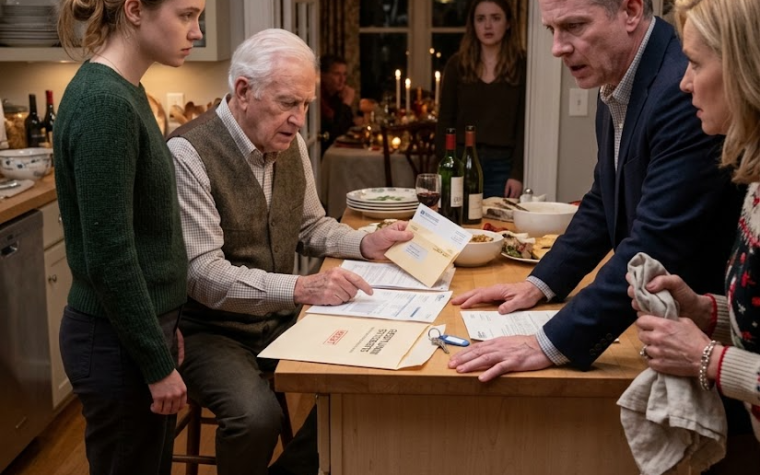
I read it while sitting in the same kitchen where I had received the original fraud alert.
My son was asleep against my chest, heavier now, his breathing warm through my shirt.
For a moment, I considered replying.
Then I realized I had spent most of my life answering accusations that were designed to make me defend myself instead of examining what they had done.
So I didn’t answer.
The house had not destroyed our family.
The ATM did not destroy it.
The lawyer did not destroy it.
A long pattern of entitlement had finally encountered a boundary with documentation behind it.
Months later, after the trust transfer was complete, I visited my grandmother’s house with James, who was finally home from deployment.
The place smelled the same as I remembered: old wood, lavender cleaner, and the faint cedar scent of the hallway closet.
I carried my son through the living room where my grandmother once taught me to play cards at the coffee table.
For years, my father had used that house as leverage.
Be agreeable.
Don’t question him.
Don’t upset your mother.
Help Vanessa.
Remember who controls Grandma’s house.
But standing there with my child in my arms, I understood what my grandmother had actually done.
She had not left me a weapon to use against my family.
She had left me something they could not take simply because they believed they deserved it.
That distinction mattered.
I never celebrated what happened to my parents.
There was no victory speech, no dramatic confrontation, no moment where everyone suddenly admitted I had been right all along.
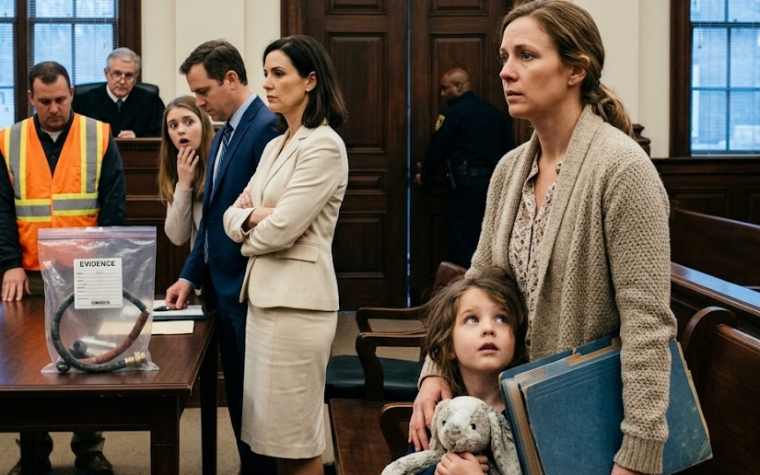
There were only records, signatures, repayment demands, changed locks, new account numbers, and a much smaller circle of people allowed into my life.
The hardest consequence was accepting that becoming a mother had not made my parents kinder to me.
It had simply made their priorities impossible to ignore.
Six days after giving birth, I had asked them for help and received contempt.
When they wanted my money, however, they found time to call repeatedly from the middle of the Caribbean.
I used to think that contradiction was the most painful part.
Eventually, it became the clearest.
My son will grow up knowing that love does not require access to his bank account, obedience in exchange for inheritance, or silence in exchange for belonging.
And the first boundary I ever truly enforced for myself began with a fraud alert, a sleeping newborn, and one quiet sentence I whispered before opening my laptop.
Not this time.