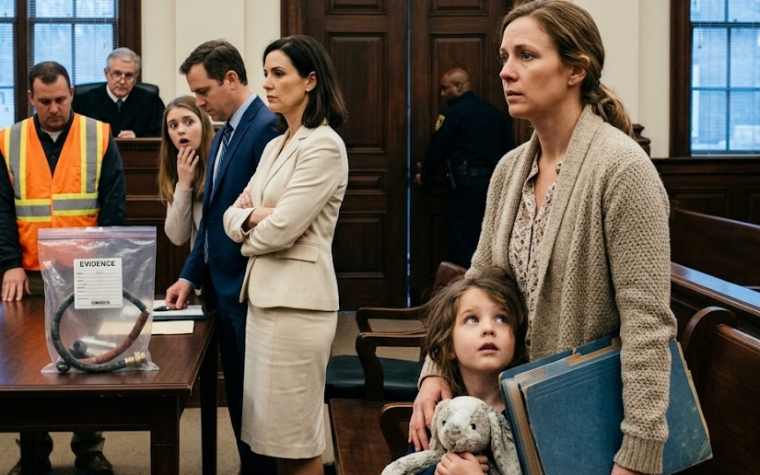
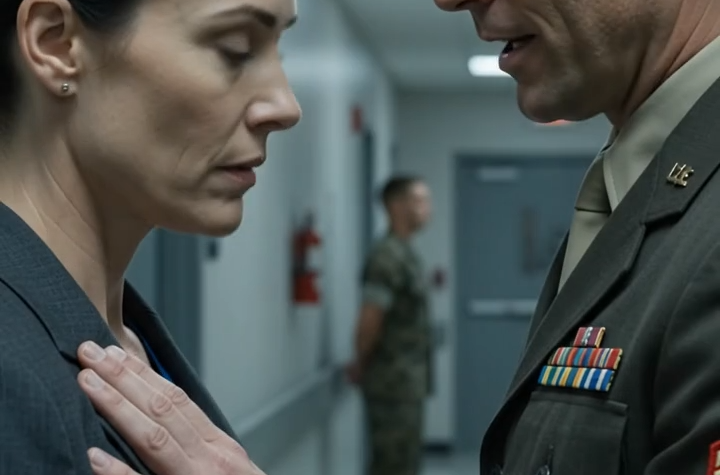
For years, Trevor had mistaken my restraint for dependence.
Chloe had mistaken politeness for weakness.
His sisters had mistaken silence for permission.
Arthur had mistaken avoidance for peace.
I had made some of those mistakes too.
I had confused endurance with loyalty.
I had kept hoping that if I stayed calm enough, useful enough, forgiving enough, eventually Trevor would choose our marriage when his family demanded that he choose between their behavior and my dignity.
Wednesday’s photograph answered that question more clearly than words ever could.
Trevor stood.
“Can I stay here tonight?”
I looked around the home we had built, including the bed visible in six-foot detail beneath the chandelier.
“No.”
He started to argue, then stopped.
Perhaps he finally understood that the version of me he knew how to pressure was gone.
He packed a bag.
I did not follow him upstairs.
I sat at the dining table while drawers opened and closed above me.
Twenty minutes later, he came down carrying a suitcase.
At the front door he turned around.
“I’m sorry.”
I believed he was sorry.
I simply no longer believed that being sorry and being safe to love were the same thing.
He left.
The house became quiet.
I stood beneath the chandelier and looked at the giant photograph one final time.
Three days earlier, that image had felt like proof that I had lost something.
Standing there alone, I understood it differently.
Chloe had meant the photograph as humiliation.
She wanted me to see her hand on my husband’s chest, my pillow beneath her head, my wedding portrait behind them.
She wanted the message to establish a winner and a loser.
Instead, she had handed me clarity in a form nobody could explain away.
I removed the photograph from its stand.
The next morning, I stored it with the rest of the records my attorney had advised me to preserve.
Not because I wanted to keep looking at it.
Because evidence has a purpose, and once it has served that purpose, you do not need to build your life around it.
The weeks afterward were quieter than the dinner.
Attorneys communicated.
Trevor moved elsewhere.
Arthur separated himself from Chloe and began handling his own marriage privately.
His daughters contacted me separately, each apologizing in ways that were imperfect but more sincere than anything I had received from them before.
I did not become close to them.
Some relationships survive truth.
Others are merely clarified by it.
Trevor tried several times to explain himself through the proper channels and, once, in a long message I chose not to answer.
The details changed.
Loneliness.
Confusion.
Family pressure.
Chloe’s influence.
None changed the central fact.
He had betrayed me, hidden it, and walked into our kitchen believing I would never know.
The legal process moved forward according to the agreement we had signed and the advice of counsel.
There was no dramatic final speech in a courtroom, no instant punishment, no magical restoration of everything those five years had cost me.
Real consequences were slower.
Trevor had to live with the collapse of his marriage and the damage to his relationship with his father.
Chloe had to face a husband who now knew exactly what had happened.