“This can still be resolved privately,” he said.
His tone had changed.
The disgust was gone.
In its place was calculation.
“What resolution?” I asked.
He glanced at Daniel, then lowered his voice.
“You keep half.
We divide the rest.
Everyone avoids more embarrassment.”
Daniel began to respond, but I raised one hand.
“You accused me of exploiting a vulnerable woman,” I said.
“You asked a judge to question my sanity.
Now that the evidence has failed, you want me to pay you to stop?”
My father’s face reddened.
“We are your parents.”
“That did not seem important when you signed the petition.”
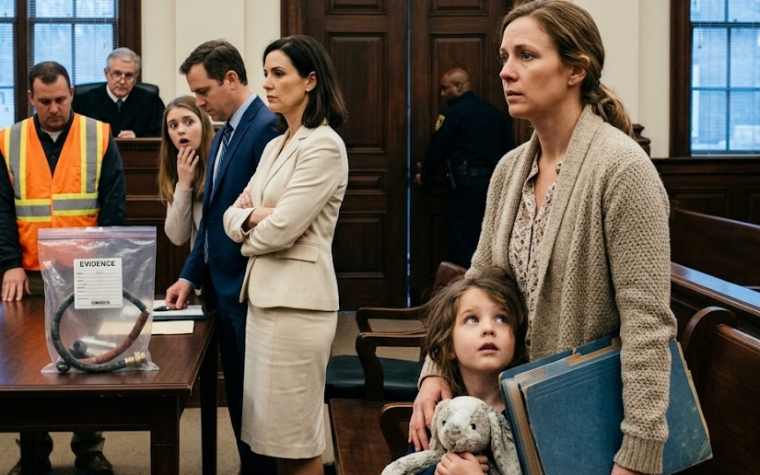
The bailiff called us back inside.
During the recess, my parents’ lawyer had advised them to withdraw the mental-incapacity claim.
They agreed, but insisted on continuing the allegation of undue influence.
That decision opened the door to the final evidence.
Daniel called Patricia as an adverse witness.
She walked to the stand with rigid shoulders.
At first, she answered carefully.
She claimed she had always maintained a loving relationship with Grandma.
She said distance and work obligations explained the infrequent visits.
Then Daniel showed her a series of messages recovered from Grandma’s phone.
One had been sent six weeks before the will was changed.
Patricia had written: “You need to stop wasting money on that house.
Sell it now, and we can decide how to distribute what is left.”
Another read: “Alexandra has no family of her own and does not need anything.
Your grandchildren should come first.”
A third message was shorter.
“Do not let her manipulate you.”
Daniel looked at Patricia.
“At the time you sent that message, had Alexandra discussed the estate with Evelyn?”
“I assumed she had.”
“Based on what?”
“She was always around.”
“So your evidence of manipulation was that she visited?”
Patricia’s composure began to break.
“She knew Mother was vulnerable.”
“Two physicians disagreed.”
“She was old.”
“Age is not incapacity.”
My mother looked toward the judge.
“I was protecting my family.”
Daniel placed one final document on the display table.
It was a letter Patricia had sent Grandma after learning that the estate plan might have changed.
In it, she threatened to challenge any will that did not provide her with what she called her rightful share.
She wrote that litigation would consume the estate and leave me with nothing.
The courtroom was silent again.
Daniel asked, “Were you protecting your mother when you threatened to destroy her estate?”
Patricia looked at me.
For one second, I saw the old command in her expression: Fix this.
Protect me.
Accept the blame so I do not have to feel it.