Her first sound was a sob.
“I’m sorry,” she said.
“You didn’t do this.”
“I sent it.”
“The bank stopped it.”
“That isn’t the point.” Her voice shook.
“I believed them.
I didn’t even ask enough questions.
Mom said Mark might die before morning.
Dad said you refused because you wanted to teach everyone a lesson.”
I gripped the edge of the table.
“What happened when you saw Mark’s name on the transfer?”
“I called Mom back.
She said the hospital wanted the money routed through him because his insurance had lapsed.”
“That doesn’t make sense.”
“I know that now.” Emily inhaled unevenly.
“Then Dad said Mark needed the money to secure treatment.
Then Mark got on the phone and said the ER had discharged him because they wouldn’t help without payment.”
Three explanations in less than an hour.
Each one designed to survive only until the money cleared.
“Where was he?” I asked, though the police had already told me.
“In the den at Mom and Dad’s house.”
I heard anger enter her voice for the first time.
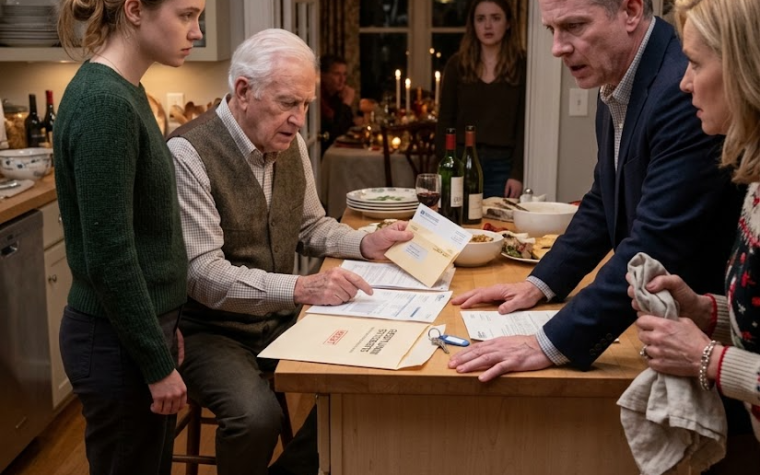
“He was sitting at Dad’s computer with the account numbers written on an envelope.
I drove over after the bank called me.
He was wearing slippers, Olivia.
He had a bowl of cereal beside him.”
The image was so ordinary that it made the betrayal feel obscene.
While my mother had sobbed about pain and suffering, Mark had been eating cereal.
“What did they need the money for?” I asked.
Emily went quiet.
“Mark has debt.
More than they told us.
Several payments bounced, and one of his lenders was going to begin collection proceedings.
Mom and Dad had already given him everything they could access quickly.”
“So they came to me.”
“They came to you first.”
The words carried shame, but not Emily’s shame.
Mine.
I had been first because I was useful.
Emily had been second because she was persuadable.
Our parents had reduced both of us to functions.
“Did they know he wasn’t in the hospital?” I asked.
“Yes.”
That single word ended something inside me.
There had been a small part of me, even after seeing the account, that wanted to believe my mother had panicked, misunderstood, or repeated a lie Mark told her.
But both of my parents had known.
They had chosen the hour.
Chosen the amount.
Chosen the medical emergency.
Chosen the precise fear most likely to make me act before thinking.
“Dad said it wasn’t stealing because the money would stay in the family,” Emily continued.
“Mark said he planned to pay us back after he got another job.”
I looked around my kitchen—the room Matt and I had renovated slowly, one saved paycheck at a time.
My family had always described my stability as luck.
They never counted the vacations we skipped, the cars we kept for ten years, or the nights I worked late while Mark abandoned another job that failed to appreciate him.