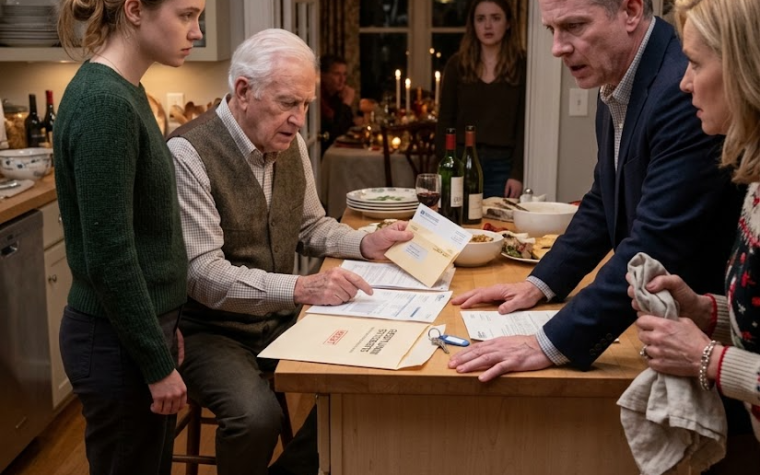
The tears stopped.
Not gradually.
Immediately.
Her mouth tightened.
“This is not the time to make it about you.”
There it was.
The rule beneath every family emergency.
Mark’s pain was the center of the room.
My pain was an interruption.
“Did you know he wasn’t in the hospital?” I asked.
She looked toward the driveway.
“Olivia—”
“Yes or no?”
“We knew he needed urgent help.”
“That wasn’t my question.”
Her face hardened.
“Your father and I made a mistake.
Families make mistakes.
But if you cooperate with the police, they may treat this like a crime.”
“It was a crime.”
“He is your brother.”
“And I am your daughter.”
She stepped closer and lowered her voice.
“If Mark is charged, your father will never forgive you.”
I stared at her.
Even now, she believed forgiveness flowed in only one direction.
My father could help invent a dying-brother story, demand my savings, and threaten me when I asked questions.
Yet I was the one expected to fear losing him.
“I’m giving the police the messages,” I said.
“All of them.”
My mother’s face changed.
For the first time, I saw genuine fear.
Not fear for Mark’s health.
Fear of evidence.
“You kept them?”
“Yes.”
“How far back?”
“Far enough.”
She left without saying goodbye.
By the end of the week, Emily’s money had been returned.
The bank closed Mark’s account and provided its records to investigators.
My parents gave separate statements that contradicted each other about who had invented the hospital story.
Mark blamed both of them.
My father blamed my mother’s panic.
My mother blamed Mark’s desperation.
None of them blamed the person who had chosen to lie until the evidence made denial impossible.
The recording settled that question.
Emily had captured my father saying, “The hospital story is the only thing Olivia will respond to quickly.”
She had not understood the importance of that sentence when she recorded it.
The investigators did.
Months later, Mark accepted responsibility for attempting to obtain the money through deception.
The legal consequences were serious but not theatrical.
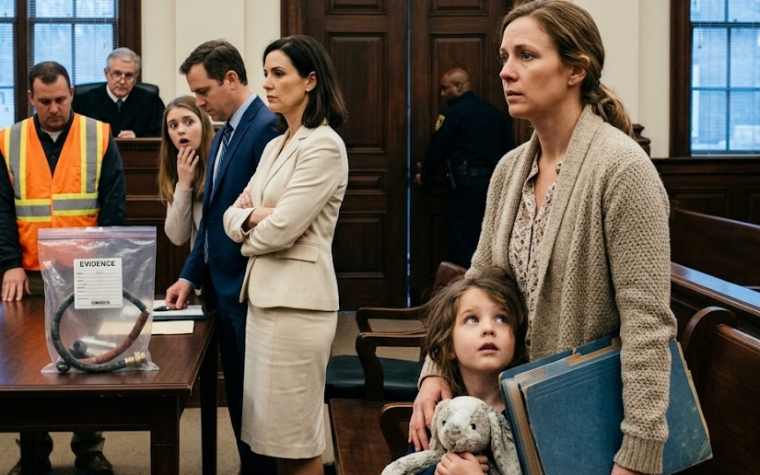
There was no dramatic courtroom confession, no shouting judge, no instant ruin.
There were interviews, hearings, repayment requirements, restrictions on his accounts, and a record he could no longer explain away as bad luck.
My parents were required to acknowledge their role in the false demand.
They avoided harsher consequences by cooperating after the recordings and messages made continued denial useless.