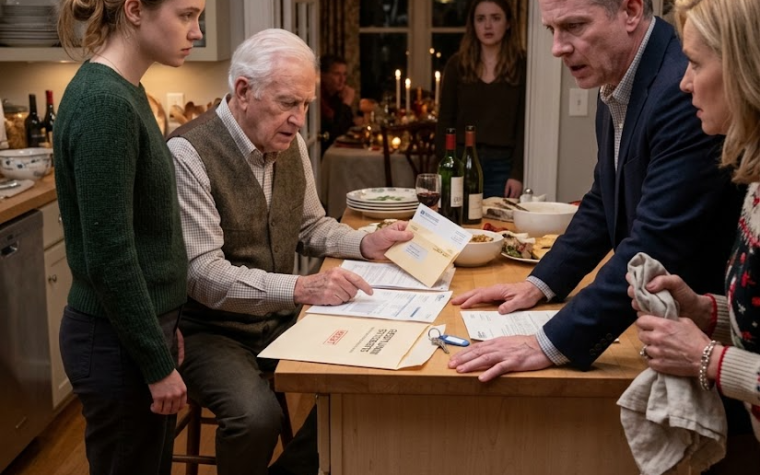
I gave her neither.
I would not use my job against her.
I also would not use my job to protect her from records she had created herself.
For a while, she barely spoke to me.
Mom tried to negotiate peace by asking me to promise never to mention the incident again.
I refused to make that promise.
Dad surprised me.
One afternoon he called and said, “I owe you an apology.”
I waited.
“For the clerk comments,” he added.
“And for acting like Rachel changing your policy was just a family disagreement.”
It was not an elegant apology.
It was enough.
Mom took longer.
She had spent years protecting Rachel from embarrassment so instinctively that she confused protection with love.
Eventually she stopped asking me to erase what happened and started asking Rachel harder questions about her finances.
Rachel finally sold the expensive car.
A few months later, she moved into a less costly home.
She hated both decisions.
She survived both.
Our relationship did not snap magically back into place.
Trust rarely works that way.
She had used information belonging to me, impersonated me, and changed a financial designation tied to my death.
An apology could acknowledge that.
It could not make me forget it.
The apology came almost six months after the dinner.
We were sitting at our parents’ kitchen table without wine, without an audience, and without the folder.
Rachel looked tired.
“I kept thinking that because I wasn’t taking money out of your account, it wasn’t stealing anything from you,” she said.
I listened.
“But I took your decision away from you.”
“Yes.”
“And I kept telling myself you would have agreed eventually.”
“Yes.”
She nodded.
“I’m sorry.”
I did not tell her it was fine.
It wasn’t.
I thanked her for saying it.
Then I told her the boundary that would remain: she would never again have access to my financial records, policy information, passwords, identifying documents, or authorization codes.
Any future financial conversation between us would happen with those limits already understood.
Rachel flinched, but she agreed.
Grandpa Joe’s old folder is still in my filing cabinet.
The policy inside is no more glamorous than it was the day he gave it to me.
It is still term life insurance.
Still paperwork.
Still the kind of practical gift Rachel once laughed at.
But I understand his words differently now.
Smart people plan ahead.
Planning ahead is not only about money.
Sometimes it is about knowing what belongs to you.
Your identity.
Your consent.
Your signature.
Your right to decide who benefits from your choices.
And sometimes the person who tests those boundaries is not a stranger hiding behind a fake account or a stolen document.