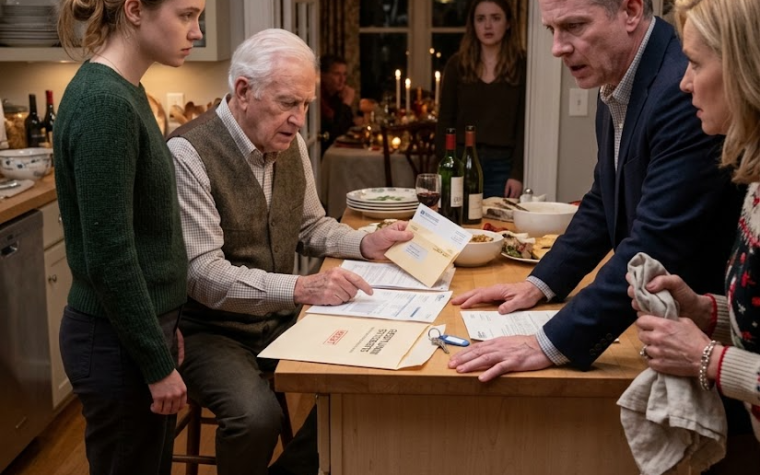
“Mom, you were upset.
You signed a lot of things after Dad died.
Maybe you don’t remember.”
“I remember every document I signed after Robert died.
I also remember the papers you left on my coffee table.
I never put my name on any of them.”
He gave a small, impatient laugh.
“So what is this?
You buy a penthouse and suddenly decide to destroy us?”
Six months earlier, that sentence would have sent me rushing to reassure him.
I would have said I did not want to destroy anyone.
I would have apologized for making him uncomfortable in my own home.
That woman had spent enough nights staring at a cracked motel ceiling.
“I did not file a false deed,” I said.
“I did not take your home.
I did not stop answering your calls.”
Brooke pushed the document away as if it might stain her fingers.
“We didn’t take anything.
You weren’t using the house properly.
It needed work, and the baby needed space.”
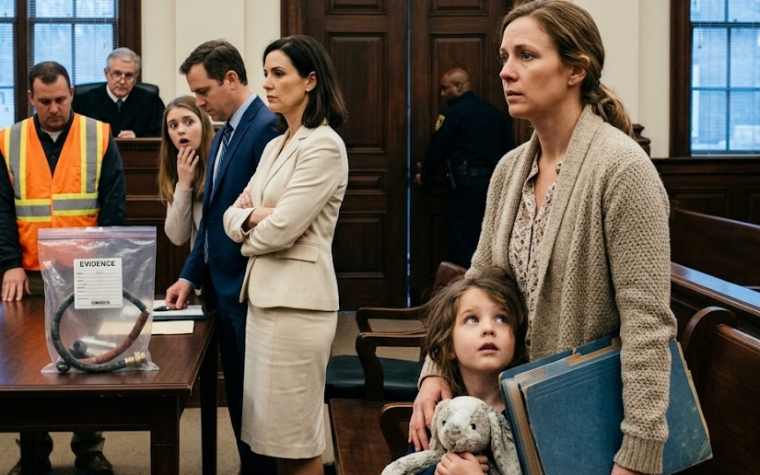
The attorney removed a third set of papers from the folder.
“Two weeks after this quitclaim deed was recorded, a home-equity line was opened against the property.”
Ryan’s face changed.
It was small at first—the tightening beneath his eyes, the slight parting of his lips—but I saw it.
Brooke saw it too.
“You said that loan was against your business account.”
“We needed money for renovations.”
“You told me it was yours to borrow.”
“It was going to be mine eventually.”
The words fell into the room and stayed there.
The attorney did not raise his voice.
“A future interest does not authorize you to remove the life tenant, forge her release or borrow against property she legally controls.”
Ryan pushed away from the table.
“Nobody forged anything.”
“Then you should have no objection to a handwriting examination and a review of the notarization.”
Ryan’s eyes flicked toward the door.
I understood then why he had come with flowers instead of an apology.
He had heard that I had bought the penthouse.
He had assumed money had made me lonely enough to forgive him.
He did not know I had already found the deed.
He did not know the county filing had been discovered.
He believed he had arrived early enough to turn my relief into guilt before anyone asked questions.
Brooke spoke more softly.
“Lori, we are about to have a child.
Whatever happened, you don’t want your granddaughter’s parents dragged into court.”
The sentence was shaped like concern, but it carried the same threat as her message from the motel.
Stop contacting us.
Now it meant something else.
Help us, or you will never see the baby.
I stood and walked to the windows.
Robert’s armchair sat beside them, restored and reupholstered after I recovered it from storage.
I rested one hand on its back.
For months, I had imagined what I would say if Ryan ever returned.
In those imagined conversations, I cried, accused him, demanded to know how a child I had loved could become a man who discarded me.
Standing there, I no longer needed an answer.
The attorney closed the folder.