Ryan would surrender his future interest in the house back to me.
He and Brooke would vacate within thirty days.
They would provide a complete accounting of the money borrowed against the property and return or compensate me for every possession they had discarded, sold or damaged.
They would cooperate in correcting the county records and resolving the fraudulent loan.
In exchange, I would consider limiting the civil damages I pursued against them.
The false filing itself would still be reported because the lender and county were already involved.
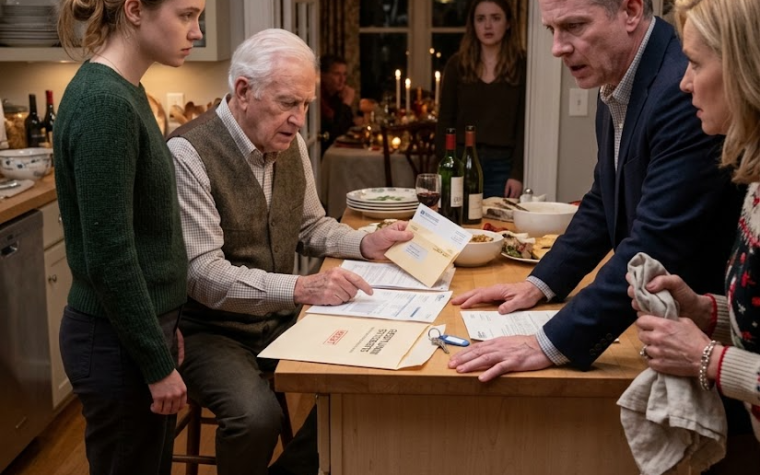
Ryan read the first page and shoved it away.
“You want to take everything from us.”
“No,” I said.
“I want you to stop taking from me.”
“We’ll have nowhere to go.”
The words were almost identical to mine six months earlier.
I waited to see whether he recognized them.
He did.
His eyes lowered.
Brooke whispered, “You have a penthouse.”
“And you had an apartment before you decided my home was easier.”
Ryan stood again.
“You’ll regret this when the baby is born.”
For the first time that evening, my voice shook, but I did not look away.
“I already know what it costs to lose my family.
You taught me that.
I will not purchase access to my granddaughter by pretending you did nothing wrong.”
Brooke gathered her coat around her.
“Come on, Ryan.”
He remained still for another moment, looking at the deed, the attorney and the room he had entered believing he could claim a part of it through apology alone.
Then he followed her out.
The bouquet stayed on the counter.
The case moved faster after that meeting because the evidence was clear.
A handwriting examiner confirmed that the signature on the quitclaim deed had been traced from an older document.
The notary admitted that I had never appeared before him.
Bank records showed that Ryan had used the fraudulent filing to obtain the home-equity line.
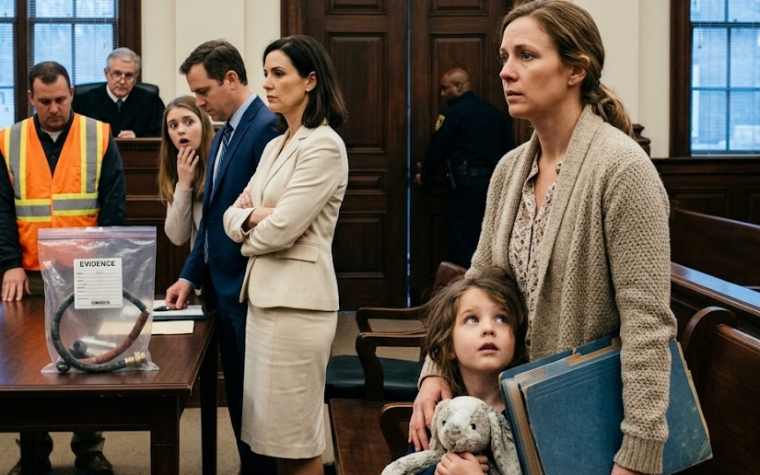
A judge issued an order invalidating the quitclaim deed and reaffirming my life estate.
Ryan and Brooke were required to leave the house while the civil claims were resolved.
They fought the order at first.
Ryan called twice, leaving messages that moved from anger to apology and back again.
Brooke sent a photograph from the nursery they had built in Robert’s old study, as if pastel walls and a crib made the theft more reasonable.
I saved everything for the attorney and did not respond.
When the deadline arrived, they moved into a small rental outside the city.
The loan proceeds were gone.
Some had paid their debts.
Some had financed renovations.
Some had simply disappeared into the kind of spending people permit themselves when they believe consequences belong to someone else.
The lender reversed the mortgage lien against my interest and pursued Ryan for the unpaid balance.
The county referred the false deed for prosecution.
Because neither Ryan nor Brooke had a prior record, and because they cooperated after the evidence became unavoidable, the criminal case ended with guilty pleas to filing a false instrument, probation, restitution and community service rather than prison.
The civil case ended in a settlement.
Ryan transferred his future interest back to me.
He and Brooke agreed to repay the value of the belongings they had sold and to cover part of my legal and motel expenses.
In return, I withdrew the largest punitive claim my attorney believed we could have won.
I did not do that because Ryan deserved rescue.
I did it because I wanted the matter finished.
Once the title was entirely mine again, I walked through the old house one final time.
The renovations had changed it.
The kitchen table was gone.
Brooke had painted the living room pale gray.