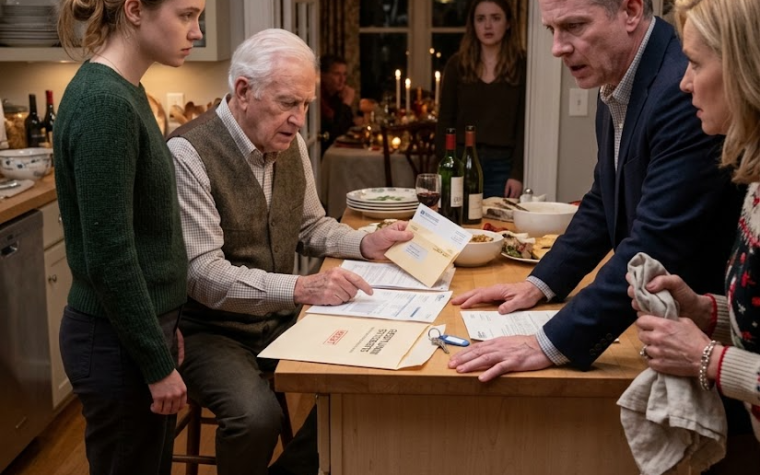
Then he sent me a letter from jail.
He wrote that he had been afraid of losing his family.
He meant Margaret and his sister.
He wrote that he never believed the powder would kill Evan.
He wrote that he had thought his mother only wanted the baby returned to intensive care so I would become overwhelmed and agree to let Margaret take control of our home.
Even in his confession, he tried to make the plan sound smaller than it was.
I gave the letter to the prosecutor.
My sister-in-law eventually admitted buying the packets and handing one to Margaret.
She claimed she had been told they would only make Evan sick.
Her cooperation helped establish where the substance came from, but it did not erase what the camera showed: she watched Margaret pour it into a newborn’s bottle and said nothing.
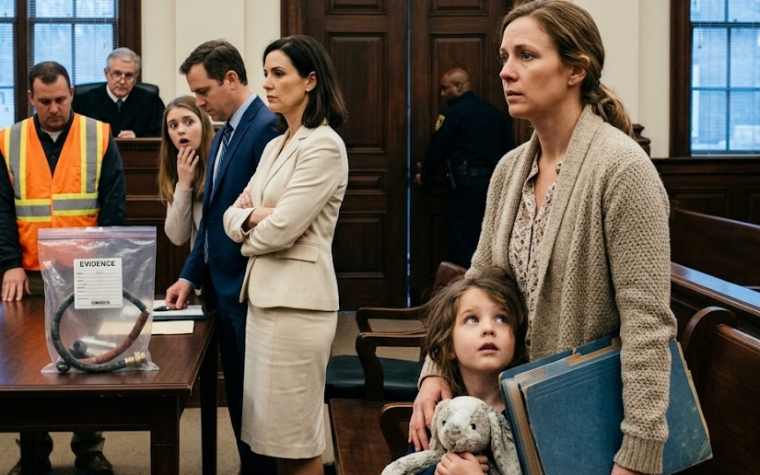
The nurse testified that my husband had deliberately drawn her away with a false complaint.
The hospital administrator authenticated the recording.
Laboratory specialists linked the contents of the bottle to the packets in the purse and to the substance found in Evan’s system.
Noah’s interview became the center of the case.
He never saw the courtroom during the worst arguments.
A trained specialist had recorded his statement shortly after the incident, before anyone could tell him what the video showed or what the tests found.
His account remained simple.
Aunt opened the purse.
Aunt gave Grandma the packet.
Dad moved the nurse.
Grandma poured the powder.
Dad told him to keep drawing.
Those details matched evidence he could not have invented.
During one hearing, Margaret turned in her seat and looked directly at me.
Her face held the same cold contempt I had seen beside Evan’s empty bassinet.
She expected me to lower my eyes.
I did not.
For years, she had used silence as a weapon.
She humiliated me at family dinners, questioned every decision I made and treated my husband’s obedience as proof of her authority.
Whenever I objected, he accused me of creating conflict.
Now the silence belonged to me.
I did not argue with her.
I did not shout.
I opened the folder containing the recovered messages and handed it to the prosecutor.
Margaret looked away first.
The legal process lasted more than a year.
There were motions, delays and repeated attempts to exclude evidence.
My husband eventually pleaded guilty after prosecutors presented the recovered conversation and his letter.
My sister-in-law also entered a plea and testified about the planning that had taken place before the hospital visit.
Margaret refused to accept responsibility until the case against her was complete.
A jury found her guilty.
At sentencing, she spoke about her reputation, her church and the years she had spent caring for her family.
She described herself as a protective mother who had made a terrible mistake.
She never said Evan’s name.
The judge did.
He spoke of an eleven-day-old child who depended entirely on the adults around him.
He spoke of a grandmother who exploited that helplessness, a daughter who supplied the means and a father who created the opportunity.
He said family loyalty was not a defense for cruelty.
Margaret received a long prison sentence.
My husband and his sister were also sentenced for their roles.
Their exact punishments never felt large enough to contain what they had done, but the truth was recorded where none of them could erase it.
Afterward, reporters waited outside the courthouse.
I walked past them holding Noah’s hand.
He was nine by then.
He had grown taller, but crowded rooms still frightened him.
He slept with his bedroom door open and sometimes woke convinced that telling the truth had destroyed our family.