I reminded him that the people who hurt Evan had destroyed it.
He had saved what remained.
We visited Evan’s grave on the anniversary of his birth.
Noah brought the drawing he had started in the hospital.
He had finished it months later with his therapist.
It showed four figures beneath a bright yellow sun: Noah, me, Evan wrapped in blue and a small red heart floating above us.
There was no father in the picture.
No grandmother.
No aunt.
Only the family that had loved Evan without conditions.
Noah placed the drawing beside the stone.
“Do you think he knows I tried to help?” he asked.
I knelt beside him.
“I think he knew you loved him.”
For a long time, neither of us moved.
I used to believe dignity meant enduring pain quietly.
Margaret had taught everyone around her that speaking against family was betrayal.
My husband had protected that lie until it cost our son his life.
Now I understand dignity differently.
Sometimes it is an eight-year-old refusing to obey a secret.
Sometimes it is a nurse sealing a bottle instead of dismissing a child.
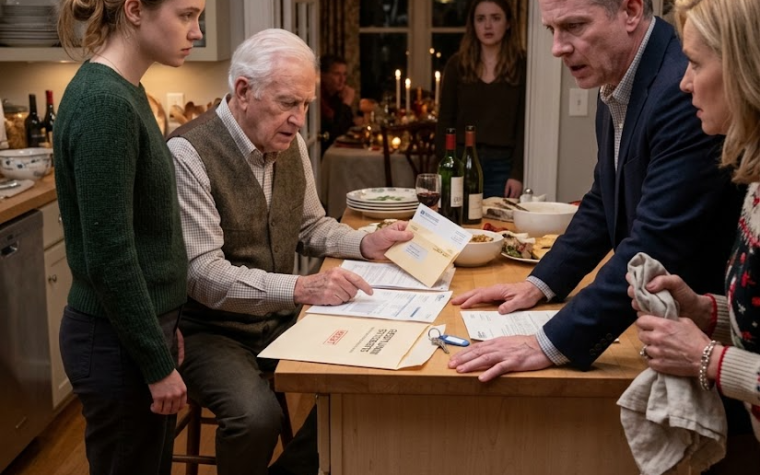
Sometimes it is a mother opening a folder when everyone expects her to break.
Evan lived for eleven days.
His life was short, but it was not meaningless.
His death exposed the truth about the people who believed their name mattered more than his life.
It freed Noah from a family built on fear, and it taught me that silence protects the cruel far more often than it protects the wounded.
Margaret said God had spared her family from my bloodline.
She was wrong.
My son’s courage preserved it.