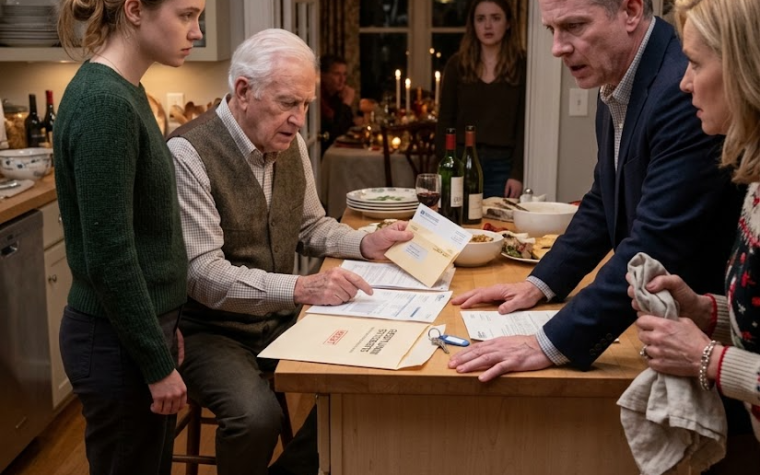
A promise became something he was still considering.
This time, I had no interest in participating.
“Rodrigo,” I said.
He stopped.
“You called me.
You said the words.
Do not place them in your wife’s mouth now because you’re uncomfortable with the consequences.”
His shoulders dropped.
Vanessa looked at him differently.
He whispered, “I was trying to keep the peace.”
“By making me the problem.”
He did not answer.
That was the first moment I saw real shame on his face.
Not panic about money.
Not fear about the apartment.
Shame.
I closed the folder.
“You should both go home and call the bank.”
Rodrigo stood slowly.
“Can I take a copy of the agreement?”
“Yes.”
I had already made one.
I handed it to him.
Vanessa picked up her bag, but before she walked toward the door, she glanced at the knitting bag near the sofa.
A corner of yellow yarn was visible.
“Is that for the baby?” she asked.
I looked at it.
“It was.”
Her expression shifted.
“Was?”
I thought about saying something cruel.
For one second, I understood the temptation.
Instead I said, “It still is.
The baby has done nothing wrong.”
Vanessa looked down.
That sentence ended the fight more effectively than cruelty would have.
They left without another argument.
The next several weeks were uncomfortable, but they were real.
Rodrigo made the next mortgage payment himself.
To do it, he and Vanessa canceled their anniversary trip and sold a few expensive items they had bought during better months.
Then he called the bank and restructured parts of their budget.
For the first time in years, he knew exactly how much his life cost.
He did not enjoy learning it.
He also met with an attorney about the loan agreement.
His attorney confirmed what mine had explained: the document could not simply be dismissed because we were family or because I had been patient about repayment.
The exact remedy would depend on how the debt was handled, but my contribution was documented and enforceable enough that ignoring it would be foolish.
Rodrigo called me afterward.
His voice was quieter than usual.
“Dad really thought of everything.”
“He tried.”
“You could have used this against me years ago.”
“I wasn’t trying to win against you.”
There was a long silence.
“I know,” he said.
That was the closest thing to an apology I had heard yet.
A week later, he came to my house alone.