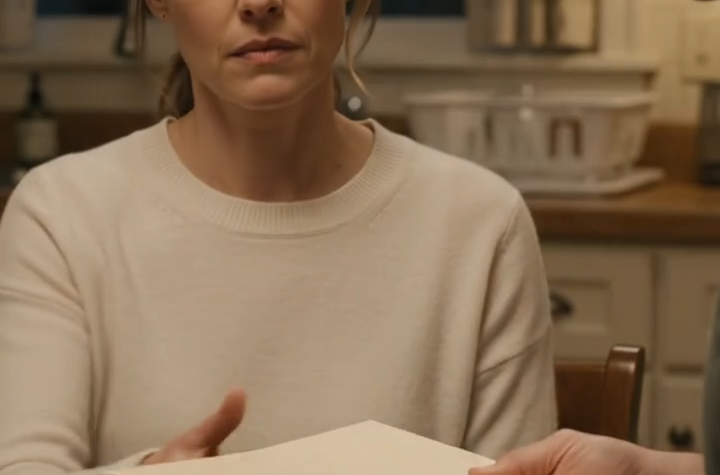
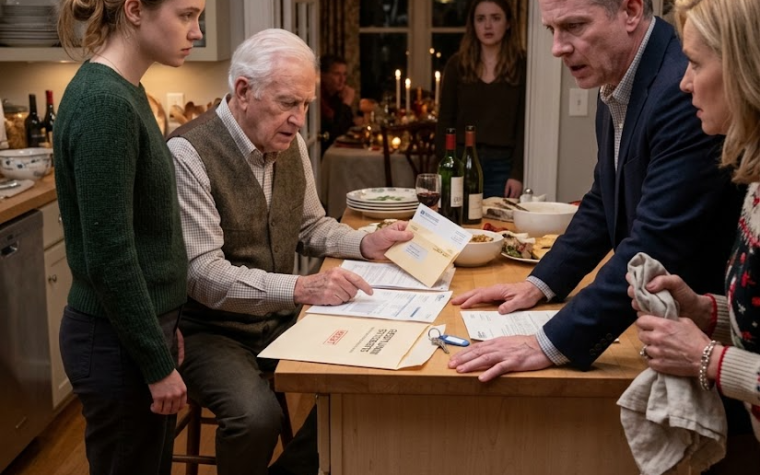
Her voice rose.
“You think living here with her every day was easy? Daniel was gone, and every decision became an argument.
Every meal, every room, every plan.
I wanted my own home back.”
There was the truth.
Not dementia.
Not safety.
Resentment.
Control.
A problem she had decided to solve by making the other person unbelievable.
Margaret looked at me, and the shame in her expression hurt more than anger would have.
“I would have left if you asked me to,” she said.
“I just wanted you to be part of the decision.”
I turned to Lila.
“You could have called me.”
“You were deployed.
What was I supposed to do?”
“Not imprison my mother.”
“She wasn’t imprisoned.”
I held up the brass key.
Mrs.
Carter looked away.
Lila stared at it as if she hated the object for existing.
I called for help.
I did not dramatize it.
I did not shout.
I explained that an older family member had been confined in a room with an exterior lock and that I needed the situation documented and my mother checked.
That was when Lila understood that the argument was no longer staying inside the family.
She began crying.
Not softly.
Not elegantly.
“Daniel, please.
Think about what you’re doing to us.”
I looked at my mother standing beside a sofa she had apparently been forbidden to reach whenever witnesses were present.
“I am.”
When responders arrived, I showed them the room, the outside lock, the hidden key, and Margaret’s notes.
Mrs.
Carter repeated what she had heard Lila telling neighbors.
Margaret answered every question clearly.
She knew the date.
She knew where she was.
She knew who I was, who Lila was, and exactly why everyone was standing in the house.
Nothing about that single conversation could substitute for a full medical evaluation, and nobody pretended otherwise.
But there was also no justification for what had been done to her.
Lila tried one final time.
“She has good periods.
That’s what I’ve been trying to explain.”
Margaret looked directly at her.
“Then you should have gotten me medical care during the bad ones instead of a padlock during the good ones.”
Lila had no answer.
That evening, she packed a bag.
I did not make a speech.
There was nothing useful left to say.
She stopped at the doorway and looked back at me.
“You’re choosing her over your wife.”
“No,” I said.