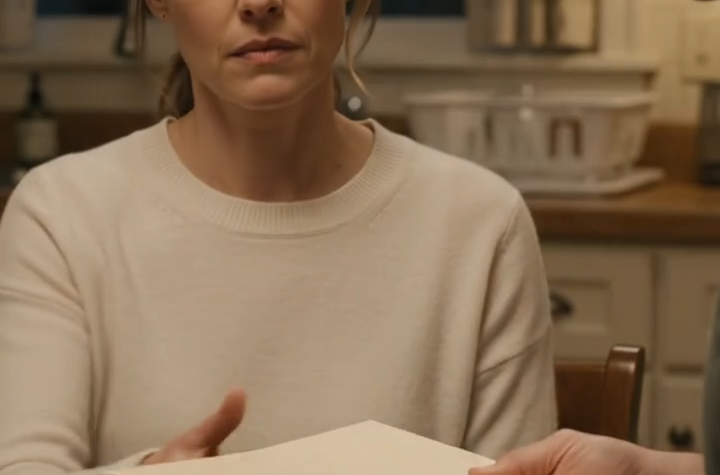
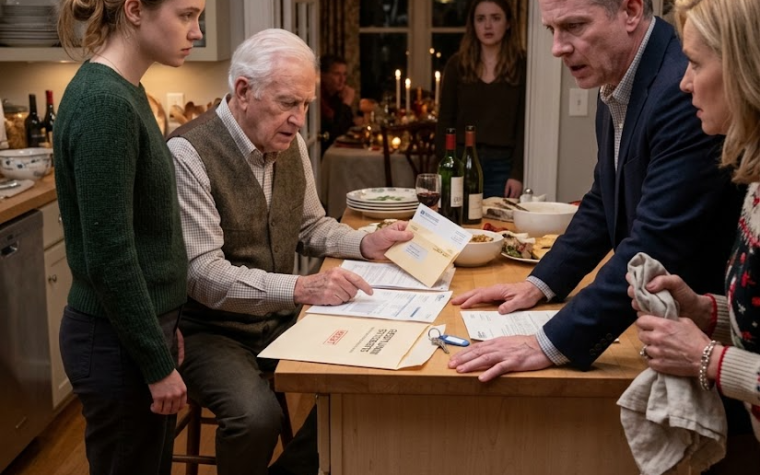
“I’m choosing not to pretend this is something it isn’t.”
She left.
The following days were less cinematic than people imagine endings should be.
There were statements.
Photographs.
Questions.
A medical appointment for Mom.
Follow-up calls.
Long conversations I wished I had been home months earlier to have.
Margaret’s evaluation did not support the story Lila had been spreading about severe dementia requiring confinement.
That did not make every fear vanish.
Aging was still aging.
Memory could still change someday.
Health could still become complicated.
But possible future vulnerability was not permission to invent present incapacity.
The exterior lock came off the bedroom door the next morning.
I removed it myself.
Then I carried the mattress back onto a proper frame and opened the curtains completely.
Mom watched me from the hallway.
“You don’t have to fix everything today,” she said.
“I know.”
I tightened one more screw anyway.
After a moment, she asked the question she had apparently been afraid to ask since I walked in.
“Did you believe her?”
I sat on the edge of the bed.
“For a few minutes, I didn’t know what to believe.”
She nodded.
That answer hurt her, but it was the truth.
Then I added, “But I noticed she tried to tell me what your words meant before she let me hear them.”
Mom looked toward the doorway where the lock had been.
“That was the worst part,” she said.
“Not being locked in.
Knowing she was building a version of me outside that room while I couldn’t defend myself.”
I understood then why she had kept the pages.
They were not simply evidence.
They were a way of holding onto her own reality while someone else kept rewriting it.
A week later, Mrs.
Carter brought over lemon cookies again.
Margaret took one bite and grimaced.
“Still terrible.”
Mrs.
Carter laughed so hard she nearly dropped the plate.
It was a small moment, but I remembered it more clearly than the arguments.
My mother sitting at the kitchen table.
Sunlight through the window.
The front door unlocked.
Her phone beside her hand.
No one whispering about her in the yard while she pounded on a door upstairs.
The house did not immediately feel normal again.
Trust does not return because a lock is removed.
But the house became honest.
And for a while, that was enough.
The brass key stayed in a drawer in my desk.
Not because we needed it anymore.
Because I never wanted to forget how small the thing was that had separated my mother from the rest of her life—or how easily a confident lie could have made that separation permanent if I had come home and accepted the story waiting for me.