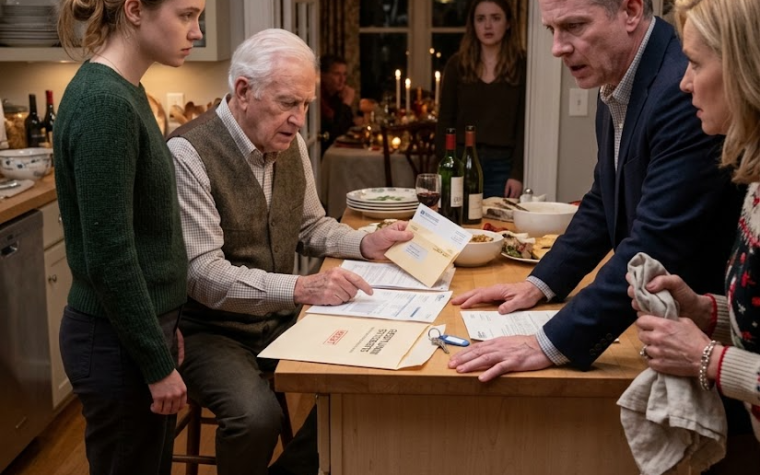
Sharon stood so suddenly that her chair struck the wall.
“This family paid for Hannah’s home,” she shouted.
“I paid their deposit.
I paid Tyler’s debts.
She would have nothing without me.”
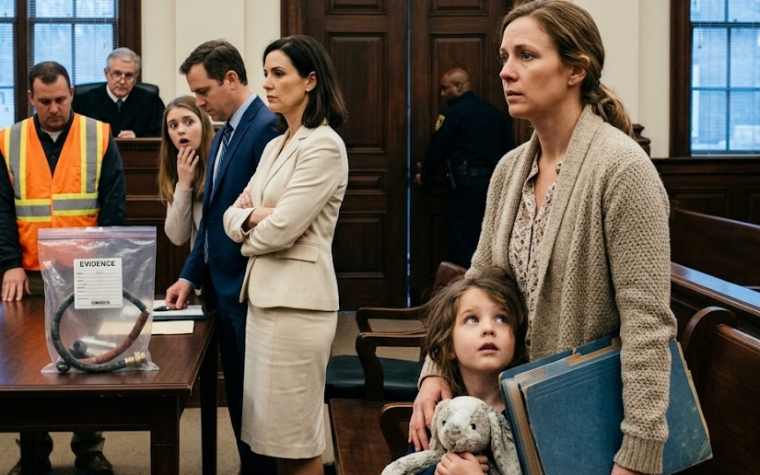
Rebecca remained seated.
“Mrs.
Brooks, you should speak through your attorney.”
“She is destroying my son’s life.”
I looked at Sharon for the first time since the messages were read.
“You destroyed his life when you taught him that protecting you mattered more than telling the truth.”
Her attorney guided her out of the room.
Tyler tried to follow me into the parking lot, but Rebecca stepped between us.
She handed him a notice stating that all communication had to go through counsel.
That evening, I moved out of the house we had shared.
Sharon had been correct about one thing: she had helped pay the deposit.
She reminded Tyler of that contribution whenever she wanted obedience.
The house had never felt entirely ours.
Every room contained some object she had selected, purchased, or used as proof of ownership over our decisions.
I took only my clothes, my medical records, and a small hospital box containing our daughter’s footprints, her identification bracelet, and the pink knitted hat a nurse had placed beside her.
I named her Lily Anne Brooks.
Tyler and I had discussed Lily before the barbecue, but he stopped using the name after her death.
Sharon referred to her only as “the baby” or “the tragedy.”
I refused to let my daughter become an inconvenience without a name.
The criminal case moved slowly.
During the first month, Sharon attempted to control the story.
She told members of her church that I had attacked her while experiencing a pregnancy-related emotional crisis.
She claimed the video had been edited.
She suggested I was seeking money from the family.
Several relatives repeated her version online.
I did not respond.
Rebecca sent preservation letters for every post and message.
Each lie became another dated piece of evidence.
The witnesses from the barbecue were interviewed separately.
At first, Tyler’s aunt Paula claimed she had been carrying food into the kitchen.
The video showed her standing beside the patio table.
Tyler’s cousin Mark said his view had been blocked by the grill.
The camera showed him facing directly toward us.
When investigators informed them that lying could carry consequences, their memories improved.
Paula admitted Sharon had spent the afternoon insulting me.
Mark confirmed that I had not struck her.
Another relative revealed that Sharon had warned everyone before police arrived not to “ruin the family over one emotional misunderstanding.”
The silence that protected her began to collapse.
Tyler came to see me once before the preliminary hearing.
He waited outside the apartment where I was staying and kept his hands visible when I approached, as though demonstrating that he was not a threat.
“I told the prosecutor everything,” he said.
“Because you were caught.”
“Because I finally understand what I did.”
He looked thinner.
His wedding ring hung loosely around his finger.
“Mom controlled everything,” he continued.
“The house, my job at my uncle’s company, the money she used to pay my college loans.
When she told me to protect her, I panicked.”
“You did not panic for one moment, Tyler.
You lied for six weeks.”
He lowered his eyes.