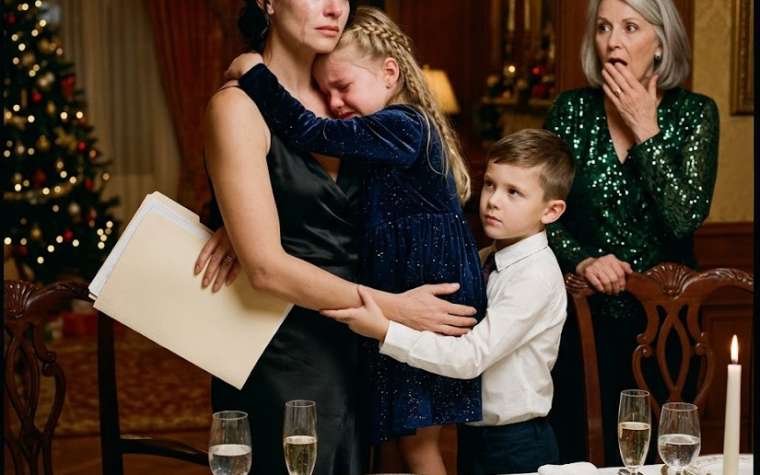
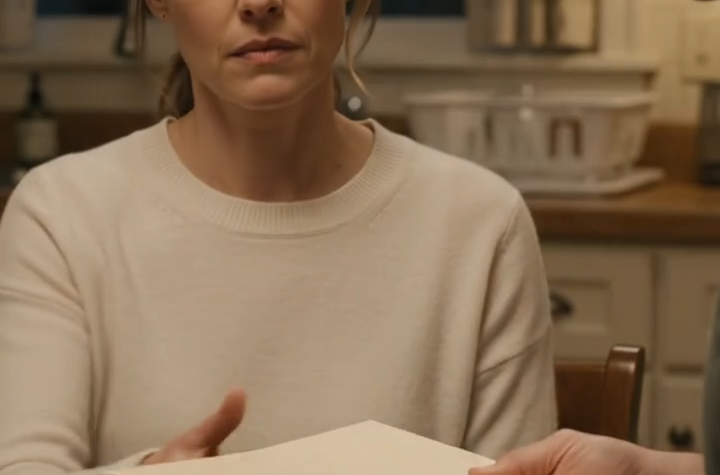
The property manager interrupted to say he needed signatures confirming receipt of the notice.
Brooke refused.
He calmly explained that her refusal would be documented and would not make the notice disappear.
Then she made her next mistake.
She told him Julian had rights because Arthur had built the house for his family.
The property manager turned several pages in the folder.
“The deed transferred full ownership to his wife after his death,” he said.
“There is no co-owner listed.
There is no trust granting present ownership to your husband.
There is no recorded lease giving you permanent possession.”
Brooke asked to see the page.
He placed it in front of her.
The printed details were clear.
Arthur’s name.
My name.
The recording information.
The mortgage release showing the loan had been paid years earlier.
For three years, Brooke had behaved as though time and confidence could convert access into title.
A single document ended the fantasy.
Julian called me again after the property manager left.
This time he went upstairs and closed the door before speaking.
“Brooke says we should challenge it.”
“On what basis?”
“She thinks because we’ve lived here for three years—”
“Julian.”
He stopped.
“Do you think the house belongs to you?”
He took so long to answer that I heard the truth before he said it.
“I thought eventually it might.”
There it was.
Not a misunderstanding.
Not simply Brooke’s influence.
My son had been waiting for my life to become his asset.
“Eventually,” I repeated.
“I didn’t mean I wanted anything to happen to you.”
“But you built your future around receiving what Arthur and I built, without asking what I wanted to do with it while I was alive.”
He tried to explain.
He said houses stayed in families.
He said selling or renting it felt like losing his father again.
He said Brooke had made plans because she believed they were creating stability.
I listened, because beneath his entitlement was grief.
The house still held his childhood: pencil marks inside a pantry door, a dent in the hallway from the year he tried to move a desk alone, the upstairs window where Arthur had taught him to replace a screen.
But grief did not excuse possession.
“I understand what the house means to you,” I said.
“Do you understand what it means to me?”
He began to answer, then stopped.
For him, the house was memory and expectation.
For me, it was thirty years of labor.
It was overtime Arthur worked to make extra mortgage payments.
It was every vacation we postponed.
It was tile chosen on a rainy Saturday, the stone garden path laid by hand, and the bedroom where I held my husband’s fingers during his final weeks.
It was also the place where I had slowly disappeared.
“I want you to become stable,” I told Julian.
“But stability that depends on my silence is not stability.
It is dependence.”
The next week stripped away the conveniences they had mistaken for ordinary life.