“Your father was furious.”
“You laughed.”
“After he left the room.”
For a moment, we both smiled.
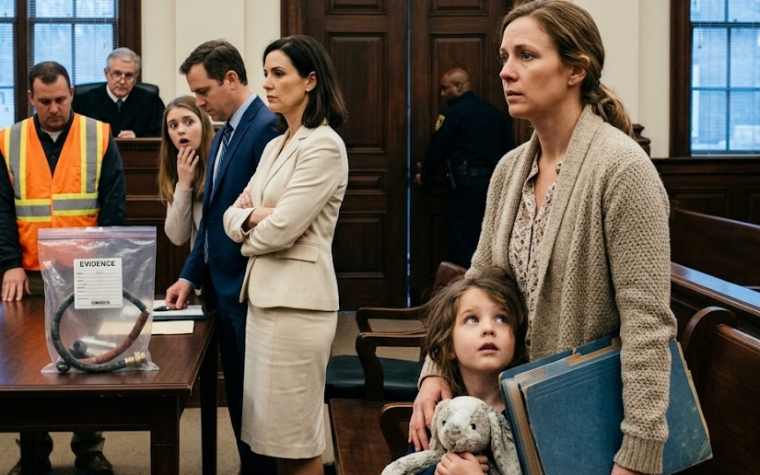
Then Julian saw the blue folder on the table.
His expression tightened.
“I’m not changing the decision,” I said.
“I know.”
He sat across from me.
Without Brooke beside him, he looked older and more honest.
“I kept telling myself I was staying out of conflict,” he said.
“But I was choosing her side every time I stayed quiet.”
I did not rescue him from the admission.
He continued.
“When she moved your things, I noticed.
When the bills came, I knew.
When she canceled your birthday, I knew it was wrong before she finished the sentence.”
“Why didn’t you speak?”
“Because speaking would have cost me something.”
That answer, at last, was true.
“And silence cost me,” I said.
He nodded.
He apologized without asking me to undo the consequences.
That mattered more than tears would have.
He told me he had signed a lease on a modest apartment near his work.
It had one bedroom, an older kitchen, and no space for Vivian to stay longer than a night on the sofa.
Brooke hated it.
But they could afford it.
Before he left, Julian placed a small package on the table.
Inside was a photograph of Arthur standing in the garden beside the unfinished stone path.
Julian had found it in an upstairs drawer while packing.
On the back, in Arthur’s handwriting, were the words: A home should invite you, not order you.
I pressed my thumb over the sentence.
For years, I had believed honoring Arthur meant keeping the house exactly as he left it and keeping our son protected from every hard landing.
But Arthur had not built a monument to dependence.
He had built a place where people were supposed to become strong enough to walk through the door on their own.
Julian and Brooke moved out before the notice period ended.
Brooke did not come to my apartment.
She sent one final message saying she hoped I was satisfied.
I did not answer.
Satisfaction was not the right word.
I felt grief, relief, anger, and a strange tenderness for the woman I had been when they first arrived—the lonely widow who heard footsteps upstairs and mistook them for proof she was no longer alone.
The house was cleaned and listed for rent.
A working couple signed a lease after agreeing to maintain the garden.
Their payments covered the property expenses and added to my savings instead of draining them.
I kept my apartment.
I hung the Vermont prints in the hallway.
I placed the brass lamp beside my chair.
I planted lavender in a wide pot on the balcony and learned exactly how low to cut it.
Several months later, Julian invited me to dinner at his apartment.
The table was small.
The plates did not match.
Brooke was polite but distant.
No one asked me to pay for the food.
No one rearranged my chair.
When Brooke began to complain about the lack of space, Julian said quietly, “This is what we can afford right now.”