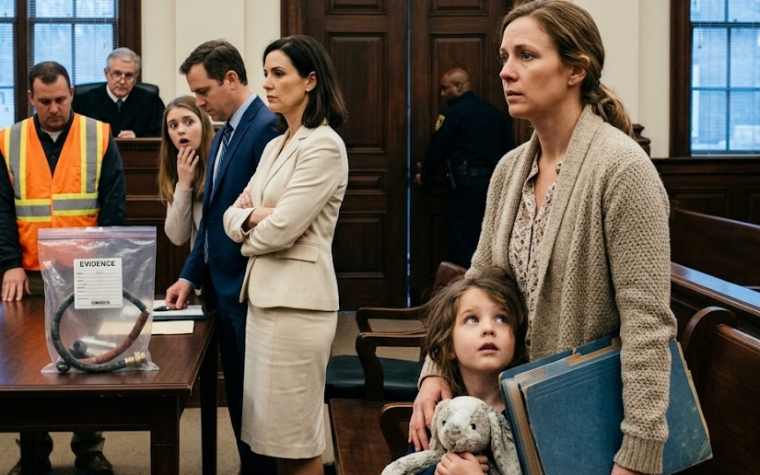
I kept my hands folded in my lap.
I had spent much of my career learning the cost of interrupting frightened people.
Silence can feel unbearable when someone you love is hurting, but sometimes silence is the safest space you can give them.
So I waited.
Eleanor told the rest.
By the time she reached the hospital, the Kensington version was already being constructed around her.
She had fallen.
She was emotional.
She was unstable.
She had misunderstood efforts to protect her.
The same story Preston repeated in the treatment room.
The same story Victoria polished with money and confidence.
The investigator asked Eleanor about the east guesthouse.
“Does it have a normal lock?”
She shook her head.
“Electronic.
Almost everything on the property is electronic.”
That was the first real break.
Not because electronic locks are magical.
Because electronic systems keep histories.
The investigator made a note.
“Who controls the system?”
“Preston and his mother have administrator access.”
I saw Eleanor realize what she had just said.
She looked at me.
I gave the smallest nod.
Keep going.
The next morning, while Eleanor slept under hospital observation, investigators began seeking preservation of the Kensington property’s access records and relevant security data.
The request covered the east guesthouse, entrances to the main house, and any system activity during the period Eleanor said she had been confined.
The Kensington attorneys objected immediately.
Their first letter described Eleanor as confused.
Their second called the inquiry intrusive.
Their third argued that private residential records had no connection to what they described as a marital disagreement.
Then the hospital footage was formally secured.
That changed the tone.
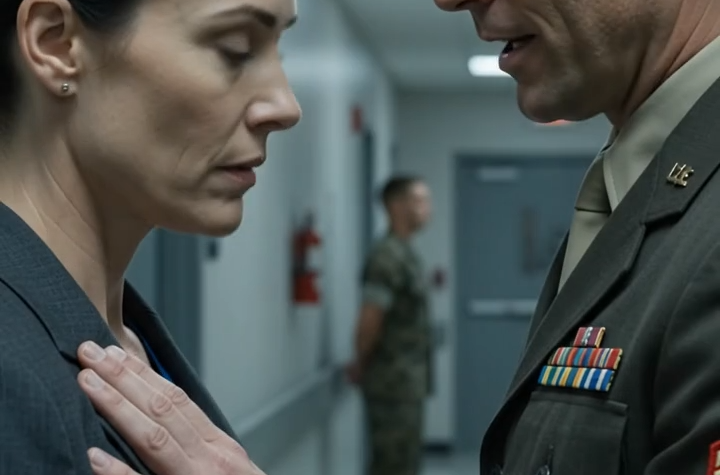
On the recording, Victoria could be seen standing in the hallway doorway in her pearls, posture perfect, speaking directly toward me.
The camera did not need to capture every syllable with studio clarity.
The hospital’s audio system covering that section of the corridor had recorded enough, and the nurse who stood nearby could identify what she heard.
“Our family owns half the judges in this city… the hospitals… the newspapers.”
Then Harrison’s warning.
“Take your damaged daughter home.”
Then my answer to Victoria.
“I won’t lay a finger on you.”
And her response.
The family had believed they were intimidating one woman.
Instead, they had created a timestamped record of themselves applying pressure to the mother of an injured patient while insisting the patient’s account was false.
Still, that did not prove the assault.
I reminded Eleanor of that when she asked whether it was enough.
“Evidence isn’t one dramatic thing,” I told her.
“It’s pieces that survive when people start lying.”
Two days later, another piece survived.
The electronic access history from the Kensington property was preserved before anyone could erase it cleanly.
The east guesthouse record showed Eleanor entering.
Minutes later, her usual access credential was disabled.
Preston’s administrator credential was then used at the guesthouse.
Victoria’s appeared later.