I woke before dawn to prepare my mother’s mole sauce.
I unloaded sacks of flour and rice because delivery fees cost more than my back did.
I cleaned the kitchen, trained servers, repaired broken equipment, and balanced the accounts after Robert went home.
The first year, we barely survived.
The second year, people began lining up outside.
By the fourth, a local magazine photographed Robert in front of the stove and called him the mind behind Vermont’s fastest-growing restaurant.
I was standing six feet away when the photograph was taken.
The published image cropped me out.
Robert framed it.
As Harvest Table expanded, he stopped asking and started informing.
He opened bank accounts I could not access.
He told interviewers that I preferred to remain behind the scenes.
He changed my title from co-owner to kitchen supervisor, then stopped using a title at all.
Whenever I objected, he reminded me that his name appeared on the newest leases.
“People know me,” he said.
“That is what gives the business value.”
But when payroll was short, he came to me.
When a supplier threatened to stop deliveries, he came to me.
When the second location lost money during its first winter, he sent me messages asking which bills to delay and which employees we could afford to keep.
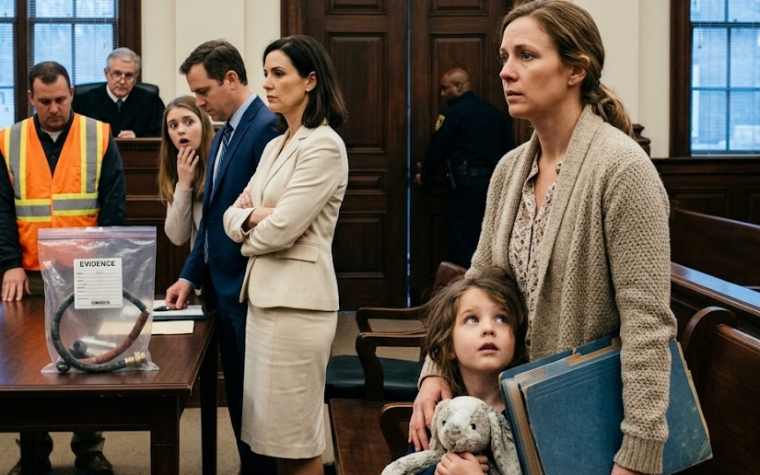
Those messages were now inside Rebecca’s black folder.
The scar on my arm came during the restaurant’s busiest holiday season.
A release valve on an industrial pot had been sticking for days.
I told Robert we needed to shut down the station until it was repaired.
He refused.
“We have reservations,” he said.
“Make it work.”
The pot tipped during service.
Hot liquid struck my arm and shoulder.
At the hospital, Robert told the admitting staff that the injury happened at home.
Later, he told the restaurant’s insurer that I was not an employee.
I spent three weeks recovering without wages, medical leave, or an apology.
Then I returned to work because the kitchen could not function without me.
The judge listened without interrupting.
Robert stared at the table.
I continued.
Our marriage ended slowly.
There was no single night when everything collapsed.
There were years of being erased one document at a time, one interview at a time, one lie at a time.
By the time I learned about Irene, Robert had already begun moving personal expenses through restaurant accounts and speaking about Harvest Table as if I had never entered its kitchen.
When I told him I wanted a divorce, he changed the office locks.
I still had a key to the original restaurant because the lease had never been replaced and my access had never been formally revoked.
One evening, I went there to collect my mother’s handwritten recipe notebooks and several personal photographs.
The office was empty.
The metal file box was gone.
As I walked toward the rear exit, I smelled smoke.
Behind the building, inside a metal disposal drum used for damaged packaging, papers were burning.
Robert stood beside it with a long kitchen lighter in his hand.
He froze when he saw me.
“What are you doing?” I asked.
“Cleaning out old files.”
He moved between me and the drum.
I saw the edge of our contract before the flames folded it inward.
I stepped toward the fire, but Robert caught my arm.
“It’s trash, Matilda.”
“It has my signature on it.”
He tightened his grip.