“Not anymore.”
A delivery truck turned into the alley, its headlights sweeping across us.
Robert released me.
He kicked the drum, scattering ash across the pavement, then walked inside and locked the door.
I waited until he left.
The fire had nearly extinguished itself.
Using metal tongs from my car’s emergency kit, I lifted every surviving piece I could find.
Some pages had burned into fragments.
Others were black around the edges but still readable in the center.
The signature page had survived because it had been folded beneath a thicker stack of financial statements.
I photographed everything where I found it.
I recorded the time.
Then I placed the pieces in clean storage sleeves and called Rebecca.
Robert believed the contract was gone because he had watched it burn.
He did not know how much remained.
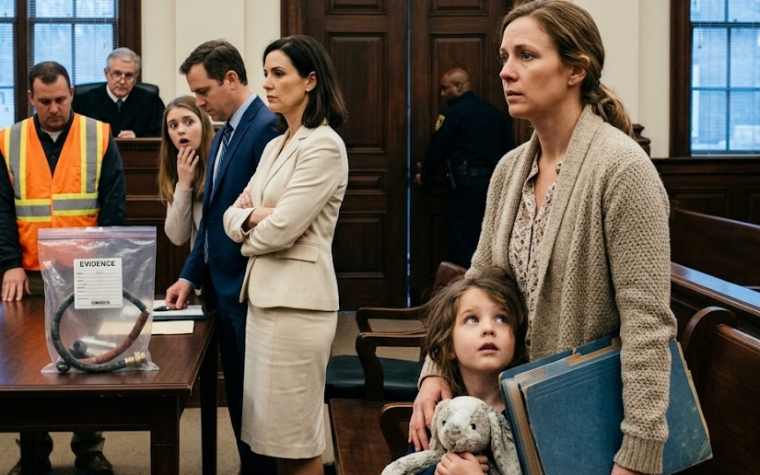
Back in the courtroom, his lawyer asked, “Did anyone witness Mr.
Ashford placing this specific contract into the drum?”
“I did.”
“You are asking the court to rely on your word during a hostile divorce.”
“No,” I replied.
“I am asking the court to examine the pages, the signatures, the messages, the bank transfers, the photographs, and Robert’s reaction when he learned they survived.”
The judge looked toward Robert.
His lawyer changed direction.
“Mrs.
Fox, even if this was once an agreement, your husband became the public face of the company.
He expanded it.
He negotiated the later leases.”
“With money generated by the business we owned together.”
“You did not appear in the magazine profiles.”
“I was working while they were being photographed.”
“You were paid for kitchen work.”
“I was not paid a salary during the first six years.”
The lawyer paused.
I continued before he could recover.
“Robert said we could not afford to pay both owners.
He took household draws.
I took nothing because he told me my equity was growing.”
Rebecca opened one of the accounting notebooks and directed the judge to a series of entries.
My handwriting recorded transfers from my mother’s account into the restaurant.
Beside several entries were Robert’s initials.
Then she produced messages in which Robert wrote, Can you approve the oven payment? and We cannot sign the second lease unless you agree.
The dates covered more than a decade.
Robert’s attorney requested a recess.
The judge granted ten minutes.
The moment the judge left, Robert turned on me.
“You stole company records.”
Rebecca stepped between us.
“Do not address my client.”
“You went through my office.”
“Our office,” I said.
Robert’s face reddened.
“You carried food.
You cleaned floors.
You think that makes you equal to me?”
“No,” I answered.
“The contract makes me equal to you.