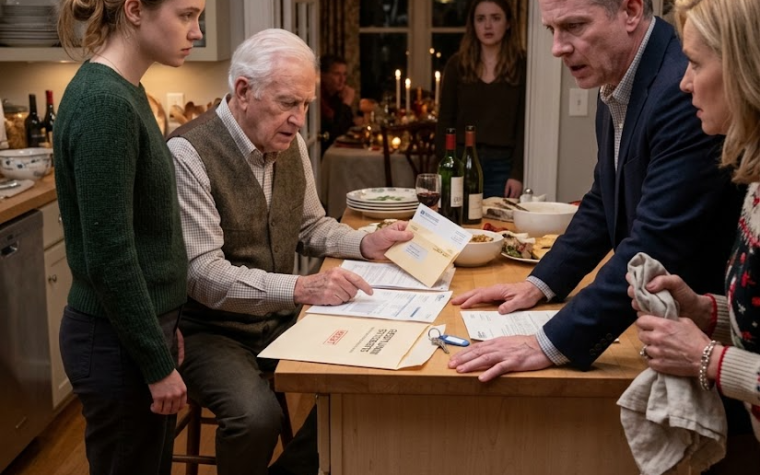
“You’re choosing her over me.”
Thomas closed the file.
“No.
You made your choices before I got here.”
The days that followed did not produce an instant fairy-tale victory.
They produced paperwork.
Rachel hired an independent divorce attorney.
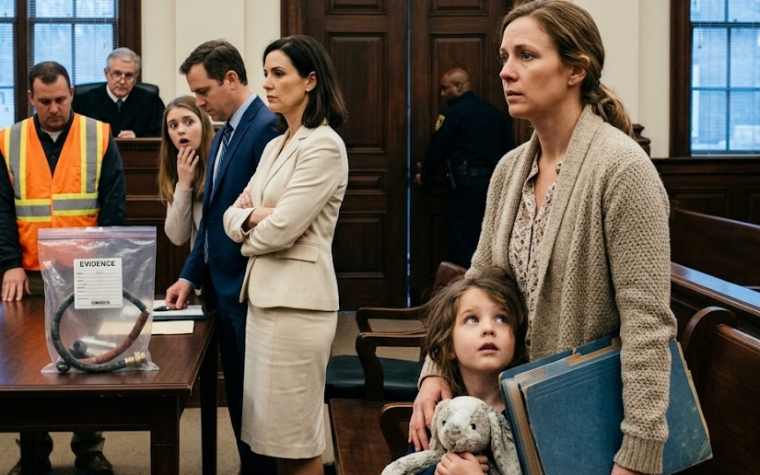
Emergency court orders preserved the remaining marital assets while ownership was sorted out.
The attempted property change was challenged immediately.
Banks began tracing the transfers Bradley had initiated.
The disputed health-coverage request was formally reversed.
Whitmore Systems conducted its own investigation.
The board did not remove Bradley because he had been a terrible husband.
It removed him after the audit found that he had mixed company resources with personal transactions, caused employees to process inaccurate information and failed to disclose matters the board determined created serious compliance exposure.
His suspension became permanent.
The suspected forged authorizations connected to Rachel’s property rights were referred to outside counsel and the appropriate authorities for review.
For Rachel, none of that mattered as much as the NICU.
Every morning, she moved slowly down the corridor to sit beside two incubators.
Her son’s hand was so small it closed around the tip of her finger.
Her daughter remained on respiratory support longer, then finally improved enough for Rachel to hold her against her chest.
Thomas visited only when Rachel invited him.
He never called himself her rescuer.
He brought coffee, sat quietly beside the incubators and learned that repairing a family required more than arriving with money after someone else had caused damage.
Bradley was allowed information about the babies through the channels Rachel and the hospital established, but Rachel refused private meetings while she recovered.
When he eventually sent an apology through his attorney, it began with explanations about pressure, expectations and mistakes.
Rachel read half of it.
Then she placed it inside the black folder with the transfer records.
Three months later, both twins were home.
Rachel still woke some nights hearing imaginary monitor alarms.
She still checked their breathing more often than necessary.
Recovery did not erase what had happened in that operating room.
But the woman who had arrived at St.
Mary’s believing there was nobody left to call no longer believed Bradley’s version of her life.
She rebuilt old friendships carefully.
She opened accounts in her own name.
She attended every legal meeting herself and asked questions until she understood the answer.
The house remained protected during the divorce proceedings, but Rachel eventually decided she did not want to raise her children in a place Bradley had used as a threat.
When the settlement allowed her to choose, she sold it.
On the final day before moving, Rachel stood alone in the empty bedroom where two cribs had once waited unfinished.
Her wedding ring was still in a small evidence envelope on the dresser.
Three carats of diamond.
Once, she had thought it proved she was secure.
Now she understood security differently.
She picked up the envelope and placed it inside the same black folder Thomas had opened outside the operating room months earlier.
Then she closed the folder.
From downstairs came the sound of one twin beginning to cry, followed almost immediately by the other.
Rachel smiled despite herself and walked toward them.
Bradley had tried to leave her with nothing.
He had been wrong about the house, wrong about the money, wrong about his father and most of all wrong about Rachel.
What survived that night was not a marriage.
It was her children, her judgment and the part of herself Bradley had spent years convincing her she could not trust.